How to Manage Your Company's Influencers or Creators Database (With a Step-by-Step Template)
Struggling to keep track of influencers and creators? This guide shows you how to build and manage an organized influencer database using a simple step-by-step template to streamline campaigns and improve collaboration.
In the last few years, influencer marketing has evolved from infrequent brand shoutouts to full-fledged advertising campaigns. Brands can now boost conversions, build brand perception, and cultivate brand trust by utilising the content of influencers' audiences. Compared to traditional paid advertising, campaigns move more quickly, content feels more natural, and the impact is frequently more organic.
But the real challenge doesn’t show up on the campaign page. It shows up behind the scenes. As brands start working with dozens or even hundreds of creators, operations get fragmented fast. Spreadsheets multiply. DMs disappear inside social platforms. Contracts live across inboxes. Deliverables slip. Performance data ends up scattered across tools instead of living in one place.
Eventually, teams start to realize that they are not managing their campaigns any longer but rather trying to keep their heads above the water. This is why a structured influencer database is important, not just as yet another sheet but as the foundation for organizing relationships between brands and influencers, deliverables and the measurement of influencer performance.
According to Statista, the global influencer marketing market is projected to reach over $32 billion by 2026, showing how quickly brands are increasing their investment in creator-led campaigns.
This blog walks through how an influencer database system works, and why it changes the way marketers and marketing agencies run influencer programs. This guide walks through how influencer agencies, in-house marketing teams, and creator-led brands can manage their influencer database in a more organized, collaborative, and scalable way, using a practical, step-by-step Stackby template designed around it.
What Is an Influencer / Creator Database and Why You Need One
An influencer database is more than just a list of names and social handles. It’s a living system where relationships, deliverables, performance metrics, content timelines, and communication history stay connected.
Without one, teams usually operate in fragments like a spreadsheet for contacts, email folders for contracts, screenshots for metrics, and a separate doc for campaign notes. This leads to important context getting lost, performance history becoming hard to reference, and ROI becoming even harder to justify.
A proper database fixes that foundation. It gives marketers a centralized working record of every collaboration, so nothing resets when campaigns change or teams evolve. New team members don’t have to rebuild context from scratch. They can see what’s worked before, what needs attention, and what to expect going into the next campaign.
It lets marketers:
- See every influencer’s past work before planning a new campaign
- Track deliverables and approvals without hunting through chats
- Negotiate better using real performance data
- Reuse knowledge instead of rebuilding from scratch every time
Over time, it becomes a relationship system and not just a reference sheet.
Common Challenges in Managing Influencers

Problems in influencer marketing don’t show up all at once. They appear gradually as programs scale and campaigns overlap.
As teams begin to manage multiple influencers across platforms like Instagram, YouTube, Tiktok and Linkedin, information stops being housed in one place. Influencer information, performance metrics, deliverables and approvals are dispersed among tools that were never meant to work together.
The following is an example of how that can operate in the real world:
Here's how this looks like in practice:
- Influencer profiles and platform metrics get scattered across multiple files, making it unclear which version is current.
- Performance data lives in screenshots, analytics dashboards, and ad reports, so pulling numbers for a presentation takes hours.
- Contracts, deliverables, deadlines, and payment status don’t sit in one place, which means someone always has to “double-check” before replying to a creator.
- Content approvals move through email chains and DMs, so feedback disappears once the campaign ends and can’t be referenced in the next cycle.
For agencies, this compounds quickly. Each client brings a new set of creators, timelines, and reporting formats, but the operating system stays the same. Over time, teams rely more on memory and individual context than shared visibility.
This is exactly where a structured system starts to matter.
How Stackby Solves Influencer Management Problems
Stackby is a spreadsheet-style, no-code database built for managing structured workflows at scale. It combines flexible tables, native integrations, internal automations, and AI-powered fields which make it a practical system for influencer teams managing growing creator programs in 2026.
Stackby consolidates all aspects of influencer marketing such as influencers, campaigns, deliverables, approvals, communications, and performance into one single workflow. Teams can use forms and AI-assisted extraction to onboard influencers rather than manually searching and copying details. A single record per influencer can store data like social handles, niche, engagement scores, audience demographics, and campaign history in structured fields.
Stackby's internal automations can send reminders, update statuses, and keep teams on schedule, eliminating the need to manually monitor deliverables and deadlines.
Stackby’s collaboration features keep everyone in loop. It helps Influencers submit their details directly via forms. Two-way email sync keeps inbox conversations thread attached to the influencer records, which makes it easier to reference back to the context during negotiations or renewals.
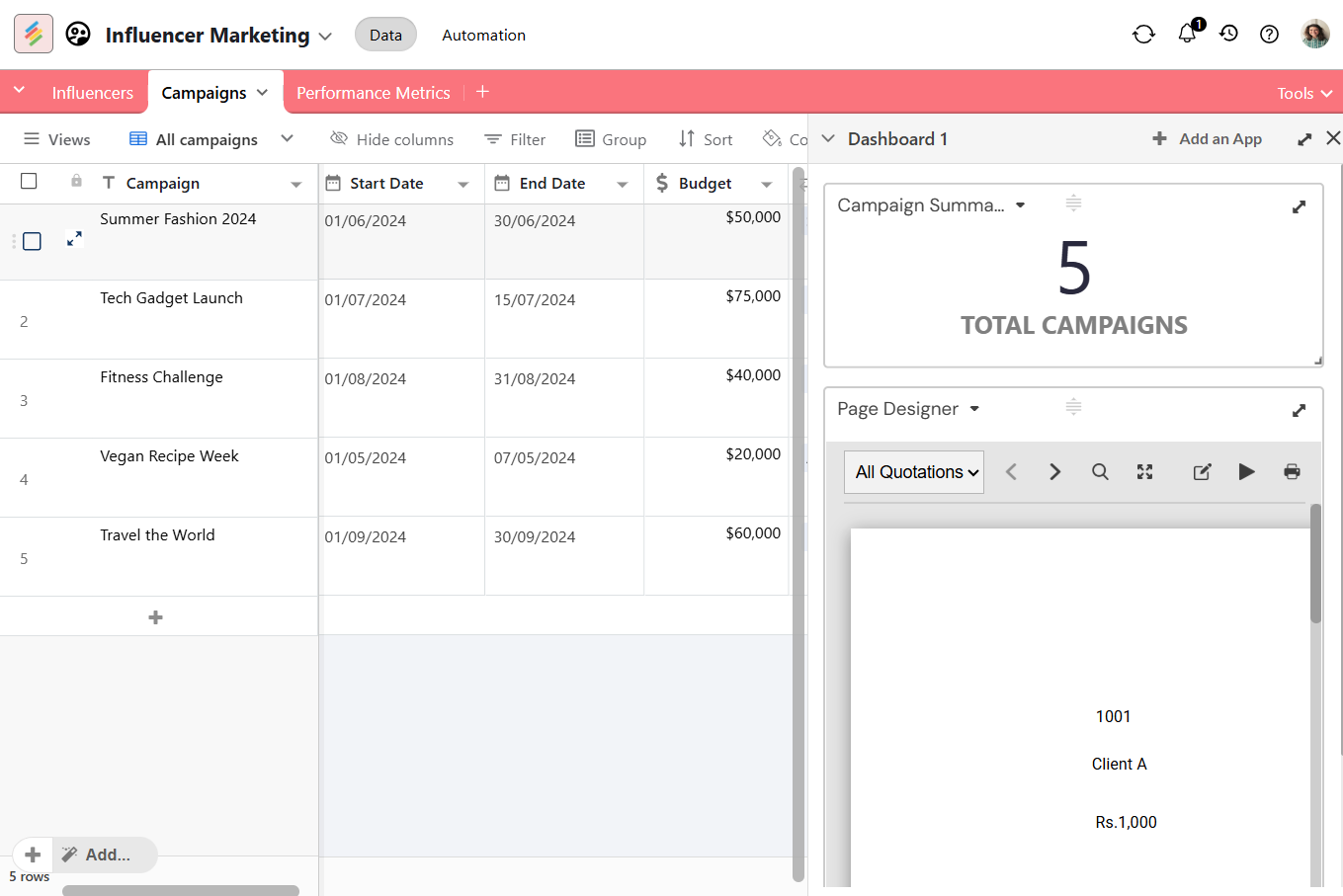
App Dashboards using charts, pivot table, summary, goal tracker, time tracker etc.,help teams monitor campaign performance, summarize outcomes, and share insights without rebuilding reports every time.
And with AI powered templates, marketers can extend workflows further, from extracting bio insights to generating performance summaries.
The Stackby Influencer Marketing Template
The Stackby Influencer Marketing Template acts as the central database for your creator program. Regardless of whether the user is an agency, brand, or startup with a number of ongoing campaign activities, it offers a pre-built structure that can be customized to each user's unique workflows.
Here’s how you can use Stackby Influencer Marketing Template that can fit into your daily influencer operations:
A. Set up your influencer database
Start by creating or importing data to the pre-built Influencer Marketing Template in Stackby. This becomes your central profile table, the place where every creator relationship lives.
Each influencer profile can include fields like:
- Contact details and location
- Social platform handles
- Niche and content category
- Audience size and demographics
- Engagement scores and performance tags
- Past campaign history
Instead of manually cleaning data, AI fields can help auto-standardize information. For example, when you paste an influencer bio or public profile link, AI can help extract:
- niche keywords
- brand fit indicators
- platform category
- collaboration relevance
So marketers spend less time formatting and more time evaluating. Over time, this table evolves into your organization’s influencer relationship memory which is searchable, reusable, and structured.
B. Track campaign assignments
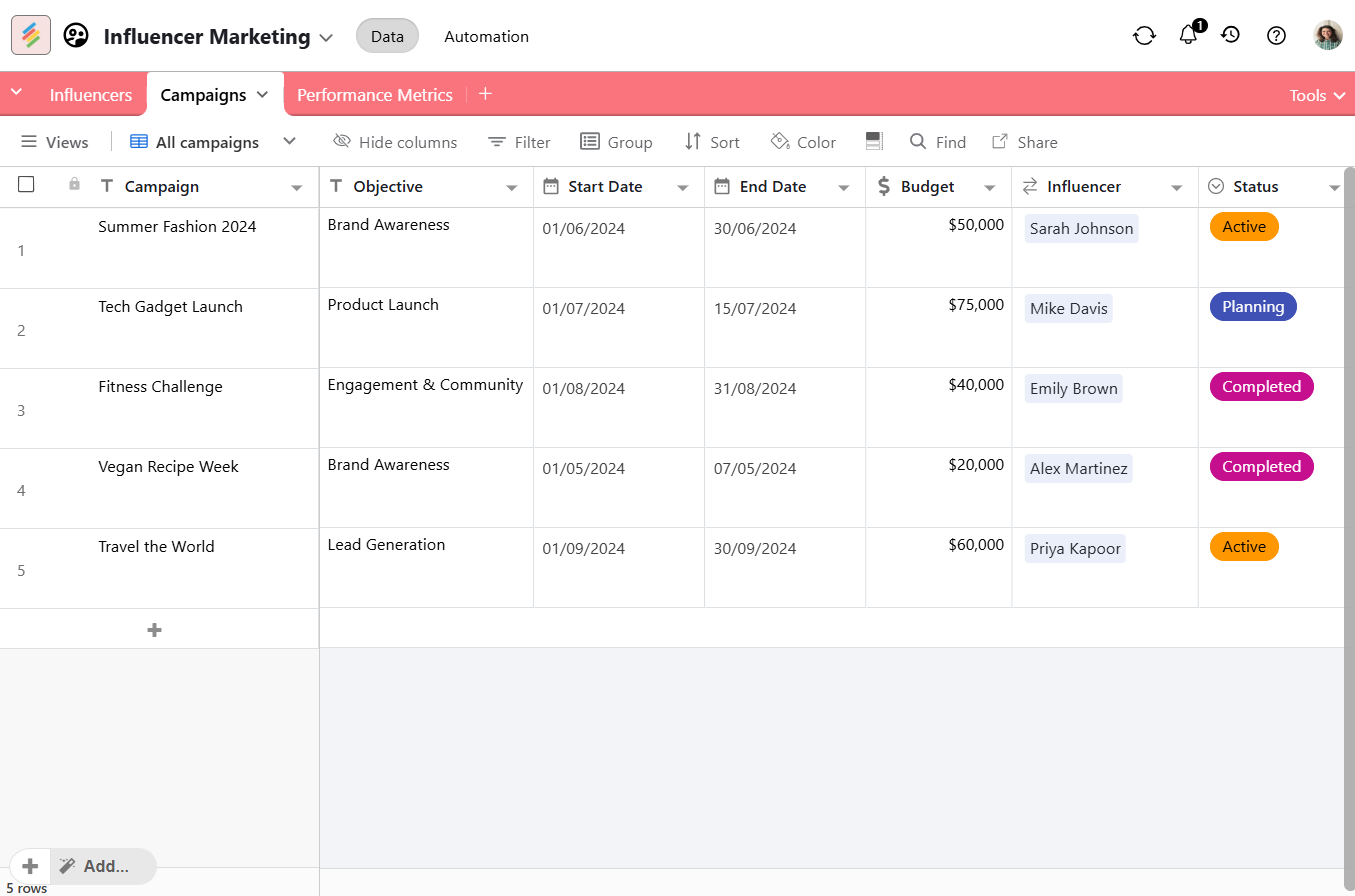
The next part of the template focuses on campaigns. Stackby being a relational database, a dedicated Campaigns table can be linked directly to influencers, so you can assign, track, and review work for each creator across multiple projects.
Typical fields in this table can include:
- Campaign name and objective
- Start and end dates
- Deliverables (posts, stories, reels, videos, etc.)
- Contract and approval status
- Compensation and payment tracking
Stackby’s multiple views make planning easier:
- Calendar and Timeline Views helps map deliverables across timelines
- Kanban View gives a quick stage-based workflow from idea, in progress, to review, and published
- List View offers a simple, filterable overview to track creators, deliverables, and statuses at a glance
This allows teams to see:
- who is working on what
- what stage each deliverable is in
- what’s pending or delayed
C. Performance tracking
Once campaigns go live, the template supports structured performance reporting across platforms.
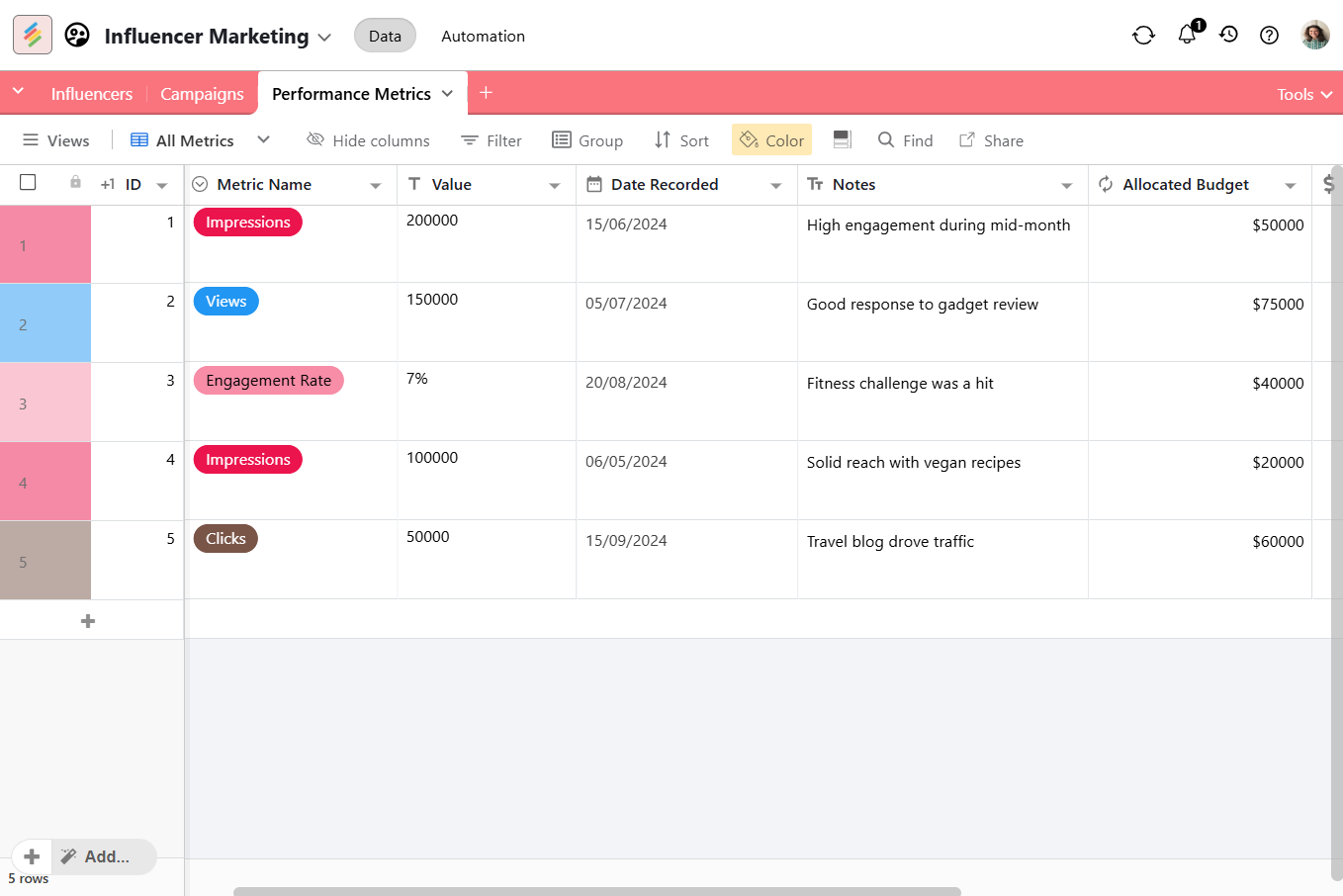
You can track:
- likes, comments, saves
- reach and impressions
- CTR or swipe-ups
- conversions or affiliate performance (where available)
Here the performance data can be pulled in automatically through third-party API connections using tools like Zapier, Make, or Pabbly, or surfaced through Stackby’s apps marketplace. This keeps metrics updated without relying on manual screenshots or exports.
Instead of compiling reports every month, AI summaries help auto-generate performance highlights such as:
- top-performing creators
- content themes that worked best
- comparative engagement trends
- insights to guide the next campaign
Visual dashboards add another layer. Charts, pivot summaries, goal trackers, and performance views make it easier to compare creators, formats, or campaigns at a glance.
D. Automate workflow
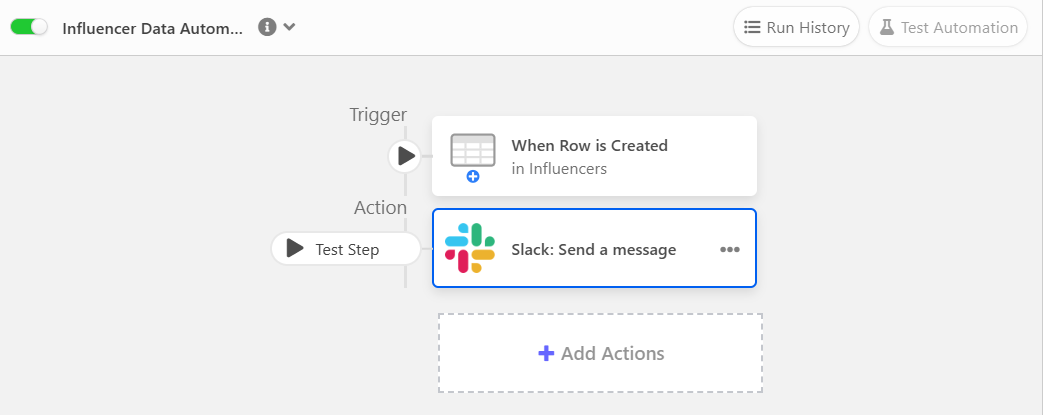
The template isn’t just a database, and if you use it intentionally, it can become a workflow engine. With Stackby’s internal automatons, you can set triggers for:
- deliverable due dates
- content review reminders
- payment follow-ups
- contract renewals
Actions can notify teams, update statuses, or send approvals to relevant stakeholders. If collaboration happens across tools, workflows can connect with:
- email for follow-ups
- Slack for campaign notifications
So context stays intact and teams don’t miss critical checkpoints.
All of this works in a way marketers are comfortable with, without requiring deep technical setup.
Other Helpful Stackby Templates for Influencer Workflows
Your influencer database becomes even more powerful when connected to complementary templates inside the same workspace.
Here’s how a few of them strengthen the workflow.
1. AI Content Calendar Template
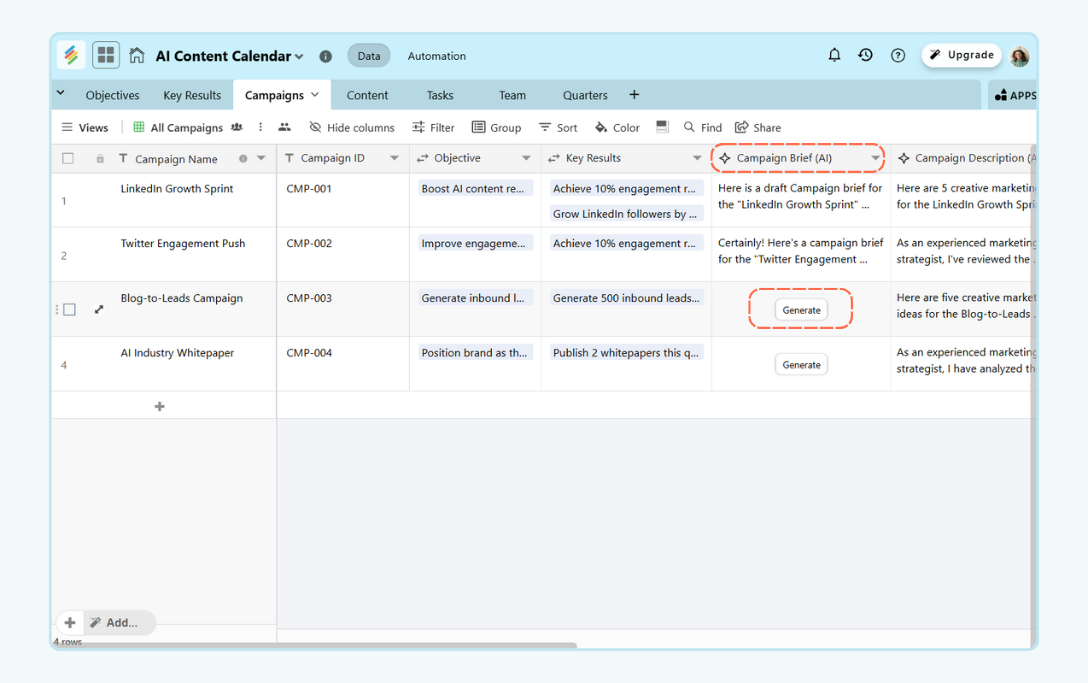
This template helps plan content schedules, publishing timelines and cross-platform rollouts. You can connect influencer deliverables to your broader calendar, so that campaign content doesn’t operate in isolation.
This way teams get visibility into when creator content goes live, how it aligns with brand posts and what’s overlapping across platforms. It keeps marketing and influencer operations aligned on one timeline.
2. AI Social Media Post Generator TemplateStackby'
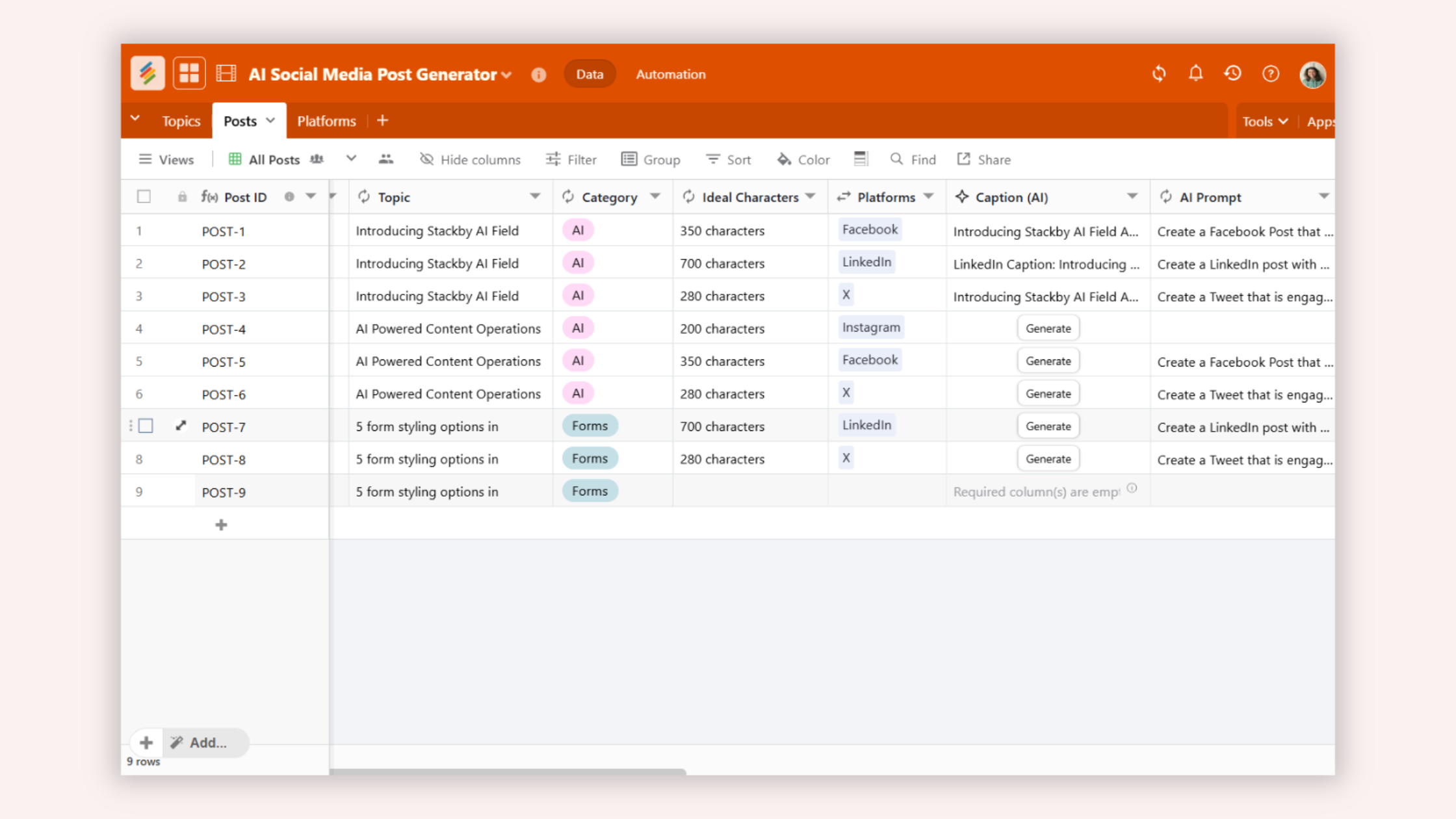
This template is especially useful when campaigns extend into reposts of creator content, UGC variations, affiliate pushes or community engagement posts.
By using AI column fields, you can generate caption drafts, creative variations, copy alternatives and captions for different platforms and around influencer assets. This helps content teams scale distribution faster.
3. Social Media Marketing Strategy Template
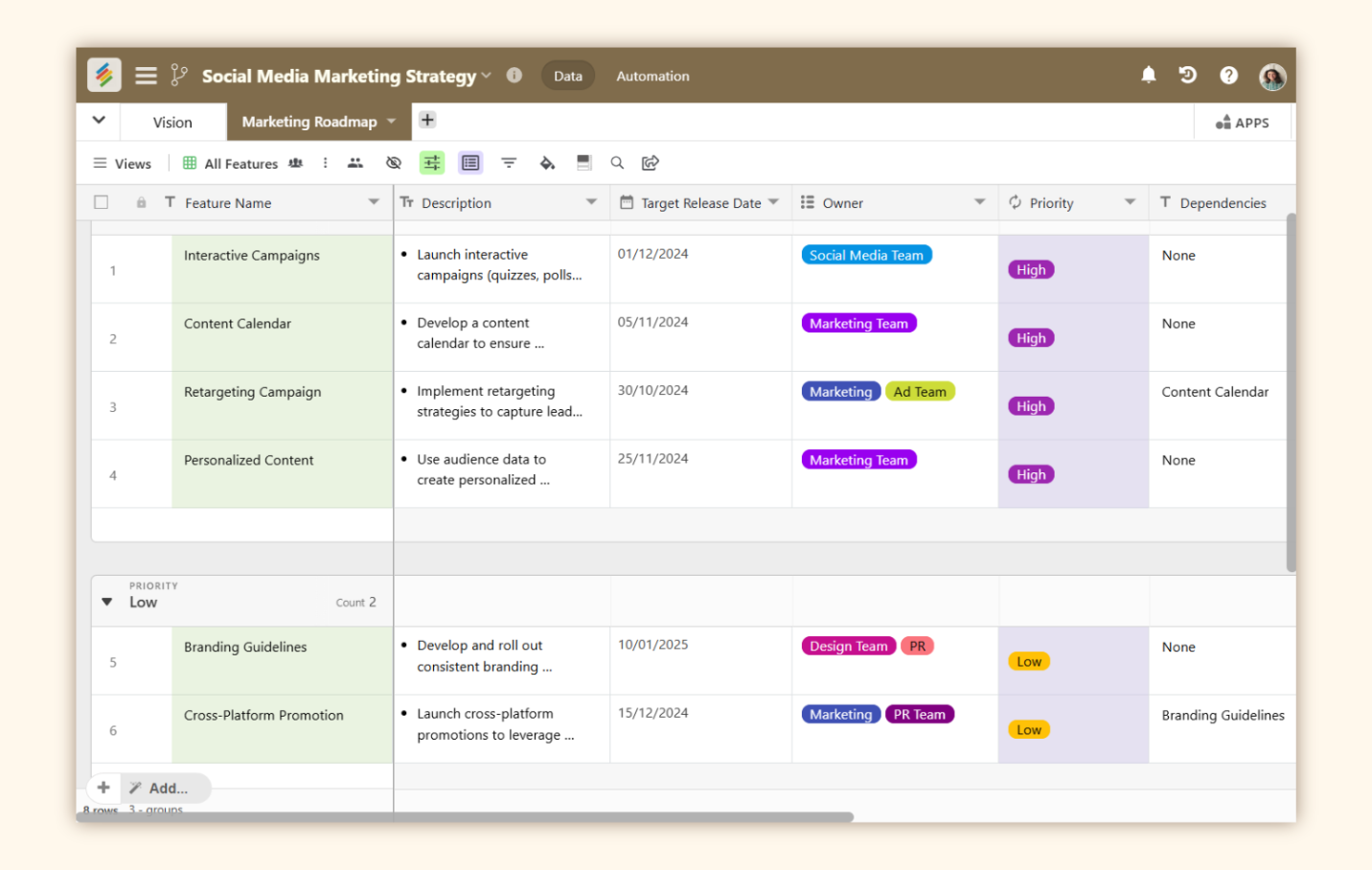
This template aims to ensure that influencer activities align with your overall marketing strategy by helping you to identify campaign objectives, allocate roles to team and stakeholders as well as by aligning outputs with key performance indicators (KPIs).
Once you link this template to your influencer database, you can easily see where exactly creators support awareness, drive conversions, and fit in with your company's overall marketing strategy as opposed to treating influencer campaigns as standalone initiatives.
4. AI Brand Checker
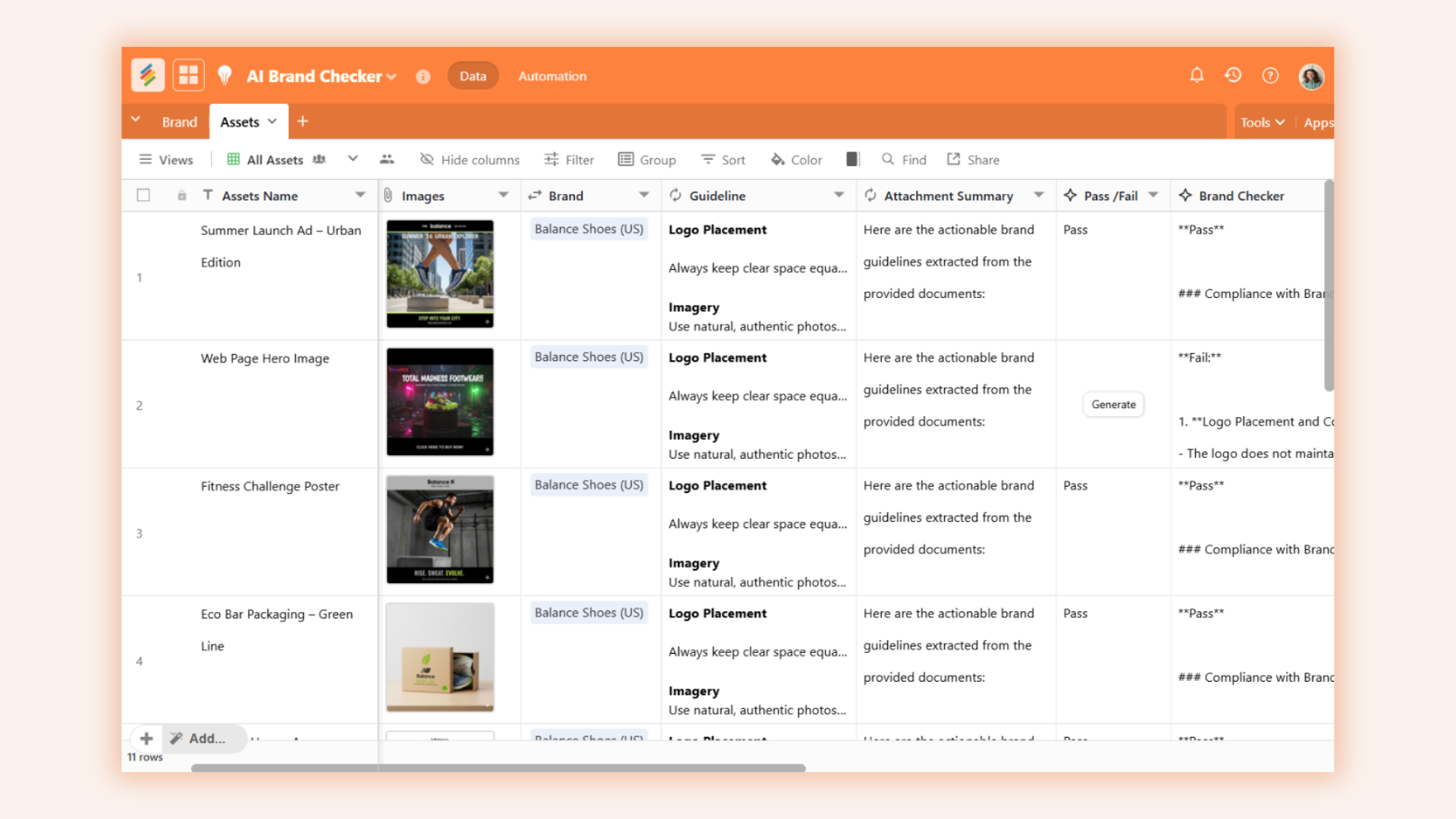
This template tracks brand mentions, sentiment changes, and social media buzz resulting from the campaigns by using AI features.
The campaign's audience response, whether the messaging is in line with consumer expectations, and any possible risks or opportunities are all highlighted in the AI-generated summary reports. It creates a continuous feedback loop from post-campaign survey efforts.
Together, these templates create a more connected influencer ecosystem and not just isolated campaign tracking.
How AI Enhances Influencer Management
AI features inside Stackby plays a supporting role, it doesn’t try to replace the marketer’s judgment or instinct, but it helps teams organize information, extract context, and understand performance faster.
AI column fields generate structured insights from influencer profiles once they are added to the database by analysing their bios, descriptions, or public links. Therefore, AI can find niche indicators, brand fit keywords, and pertinent signals that facilitate shortlisting rather than team members manually going through each profile to determine whether the influencer fits into beauty, lifestyle, tech, fitness, or finance.
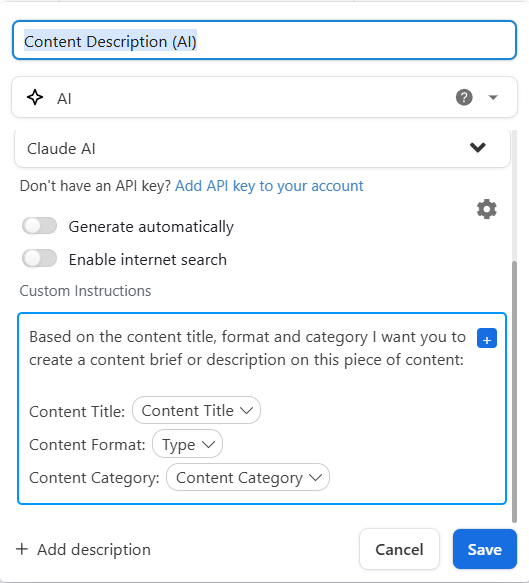
The same applies during reporting. After a campaign ends, teams don’t just look at raw numbers, they want meaning. AI summaries assist in transforming performance tables and engagement metrics into narrative highlights, such as which creator tier produced more significant results, what types of content performed better, and what trends might guide future partnerships. This becomes especially useful for agencies that prepare weekly or monthly reports for multiple clients at once.
As more campaigns are entered into the database over time, AI-assisted records begin to show patterns, such as which formats lead to conversions, which influencer categories consistently produce higher engagement, and where budgets typically result in the highest return on investment. Teams begin making decisions based on organised evidence rather than just intuition or sporadic outcomes.
How Agencies vs Internal Teams Use an Influencer Database
The fundamental concept of an influencer database doesn't change, but internal teams and agencies may implement it differently.
Agencies usually manage influencer relationships for several clients, each of whom may have a distinct objective, timeline, and reporting style. Agencies typically set up a separate workspace for each client and each project cycle has its own dashboard and campaign tables. This keeps data clean, prevents confusion when handling several accounts, and still enables agencies to explore institutional knowledge for use in the future, particularly when the same creator collaborates across different campaigns.
On the other hand, internal marketing teams typically use a single shared repository for all creator relationships. The database then becomes a long-term relationship hub for all interactions with creators, the negotiations and performance records. The same creators can be referenced by various teams, including partnerships, brand marketing, growth marketing, and social media, which improves outreach and collaboration across campaigns and product lines.
Both agencies and internal marketing teams benefit from this structure, but the focus changes. While internal teams concentrate on preserving continuity and relationship depth, agencies place a higher priority on maintaining clarity and consistency across clients.
Common Mistakes in Influencer Database Management
Many of the common challenges in influencer operations don’t come from lack of effort rather they come from fragmented systems. Here are a few patterns that often hold teams back:
- keeping information across multiple sheets and documents instead of maintaining one unified database.
- relying on manual follow-ups for deadlines, revisions, or payments instead of automations.
- overlooking performance history while planning new campaigns
- rebuilding workflows instead of creating reusable campaign pipelines
Future of Influencer Management in 2026
Influencer management is steadily moving toward more predictive and connected workflows. As structured datasets grow, AI-driven scoring models and historical performance insights can help marketers evaluate creators more confidently before entering negotiations.
Real-time alerts around performance spikes, drops, or unusual engagement behavior can make campaign monitoring more proactive than reactive.
Reporting will also become richer by not staying limited to spreadsheets, but supported by multimedia insights and automated summaries that reduce manual compilation work.
And with no-code tools like Stackby, more teams, even those without technical backgrounds will be able to design sophisticated influencer workflows without relying on heavy custom systems.
The direction is clear: less chaos, more clarity, and processes that scale naturally with campaign volume.
Conclusion
A structured influencer database revolutionizes how teams work with influencers in terms of planning, collaboration, and measuring creator campaigns. It brings relationships, deliverables, communication, and performance data into one organized system, something that scattered spreadsheets or chat threads rarely manage to sustain.
With Stackby, these workflows come together through databases. Its AI fields, automation features, forms, and dashboards, have all been designed to work in perfect harmony with how teams work. This way, teams can scale with confidence, consistency and clarity in all of their influencer campaigns. Get the most out of your influencer marketing campaigns by signing up with Stackby today.
FAQs
1. What is the best way to manage influencer collaborations without using multiple spreadsheets?
The easiest way is to use a centralized influencer database instead of juggling spreadsheets, notes, and emails. Tools like Stackby help teams store influencer profiles, track campaign deliverables, and manage collaborations from one workspace, making influencer operations much easier to organize and scale.
2. How do influencer marketing agencies track influencer performance across campaigns?
Most agencies maintain a structured database where they log engagement metrics, reach, campaign deliverables, and collaboration history for every influencer. With the help of dashboards and realtime reports, they can quickly identify which creators consistently deliver strong results.
3. How can brands quickly shortlist the right influencers for a campaign?
Brands typically shortlist influencers by filtering creators based on niche, audience type, engagement rate, and past campaign performance.
4. Can small marketing teams or freelancers manage influencer campaigns without dedicated software?
Yes. Small marketing teams and freelancers can start with simple tools, but as collaborations increase, tracking everything manually becomes difficult. A platform like Stackby can be a good starting point because one can sign up for free and only pay when they start scaling.
5. How does AI help in influencer marketing management?
AI helps marketers analyze influencer data faster by summarizing campaign results, organizing creator information, and highlighting useful insights from performance metrics.
![13 Best Business Management Software for your Work [2026]](/blog/content/images/size/w960/2024/03/stackby-business-blog-image-1.jpg)
![10 Best Free Database Templates for Marketing Agencies in [2026]](/blog/content/images/size/w960/2024/03/stackby-Database-templates-for-marketing-agencies-1-blog-post-2.jpg)