What Is Vibe Solutioning? Solving Business Problems with No-Code + AI
Learn what vibe solutioning is and how to solve real business problems using no-code tools and AI. Discover how Stackby can help. Start free today.
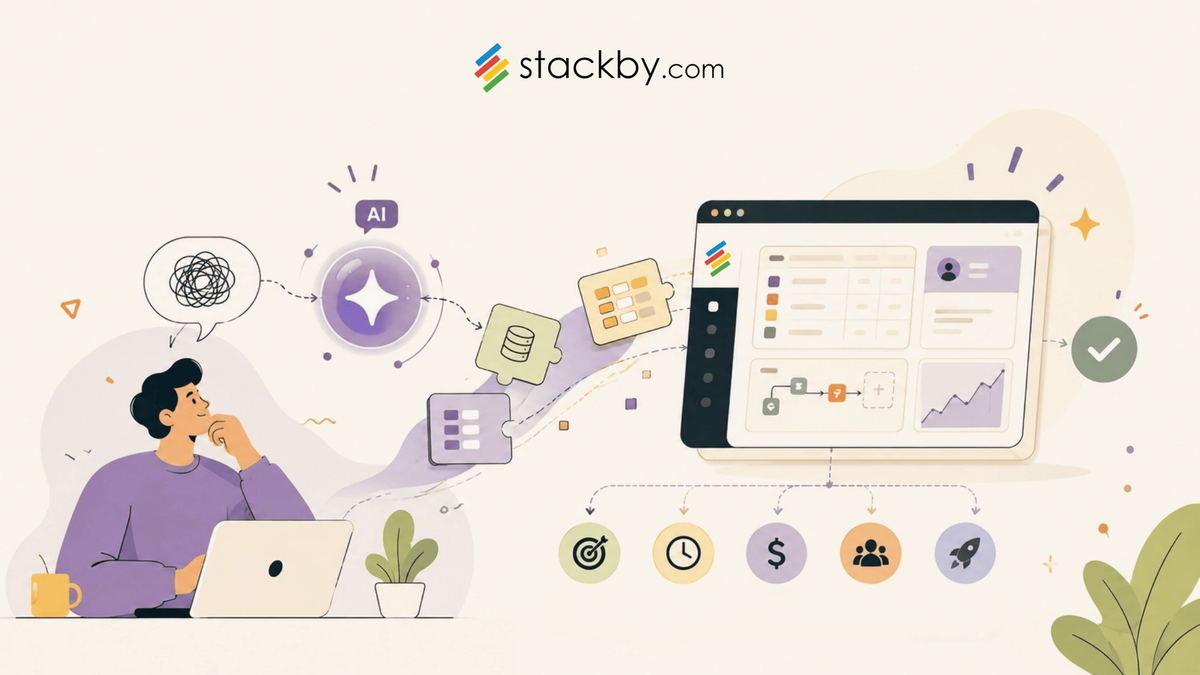
Something fundamental shifted in how teams handle broken processes. Three years ago, if your lead handoff was a mess, you filed a ticket and waited. Today, you describe what you need in plain language, and a no-code platform helps you build the fix in an afternoon.
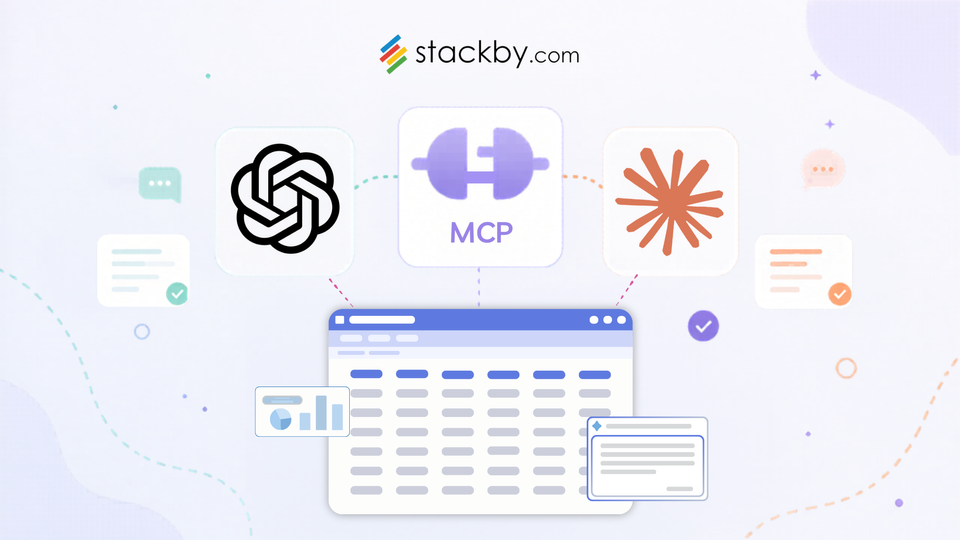
That shift has a name: vibe solutioning. It's the practice of using AI and no-code tools to solve real business problems by describing the outcome you want, instead of writing code or waiting on a developer. No syntax. No deployment pipelines. Just intent, and a platform smart enough to help you get there.
Stackby is built exactly for this kind of work. It combines relational databases, built-in AI, custom UI interfaces and no-code automations in a single environment designed for teams without a dedicated engineering team. More on what that looks like below.
This post covers what the approach actually means, how it differs from vibe coding, which platforms do it well, and what to evaluate before you commit.
TL DR;
- Vibe solutioning means solving business problems through natural language intent and no-code tools, without writing or deploying code.
- It's distinct from vibe coding - the output is an operational system your team uses immediately, not a codebase someone maintains.
- The approach works best when clear problem framing meets a platform built for structured data, automation, and AI together in one environment.
What This Approach Actually Means in Practice
The term sounds newer than it is. The core idea - describing intent and letting smart tools handle the execution - has been building for years. What's changed is that the tools have finally caught up.
At its core, this is about solving a business problem using AI and no-code tools by expressing what you want in plain language. Not specification. Not logic. Direction.
"Every time a form is submitted, create a row in my pipeline table, tag it by region, and send me a Slack message" is exactly the kind of challenge this approach handles. A developer would write that in Python. On the right platform, you'd build it in 20 minutes by clicking through a workflow builder.
The "vibe" part isn't decorative. It refers to intent-first building. You specify what you need, not how to get there. For the majority of teams operating without dedicated technical staff, that distinction is actually significant.
Vibe Solutioning vs. Vibe Coding
These two get mixed up constantly. They're not the same.
Vibe coding is about generating actual code. You describe a feature in natural language, the AI writes JavaScript, Python, SQL, whatever's needed, and someone reviews, tests, and deploys it. It's useful. But it's still fundamentally a developer activity. The output is code someone has to own and maintain.
This approach is different. There's no generated code. No deployment pipeline. You're building an operational solution directly inside a no-code platform - a workflow that runs, a database that syncs, a report that populates automatically. The output is a working system, not a codebase.
One replaces writing code. The other replaces needing it.
That's a real difference if you're running a 6-person startup with one part-time contractor and a backlog full of broken internal processes. Vibe coding gives your contractor better tools. This gives your whole team the ability to fix things without waiting on anyone.
Three Things That Make It Actually Work
Good results don't happen by accident. Three pieces need to be in place.
Clear problem framing. Describing what you want - specifically - is half the job. "Our content calendar is a mess" is a feeling. "Writers don't know when content is approved and keep missing publish dates" is a problem worth solving. The more concrete your description, the better the tool can match to a solution.
The right platform. This is where most teams go wrong. Not every no-code tool is suited for this kind of work. Many are glorified form builders. Some automation tools assume you already know exactly what you're automating. The platforms that actually deliver are the ones that combine structured data, flexible automation logic, and AI in a single environment - without making you stitch three separate tools together. Stackby is built that way. Airtable is too, though the pricing escalates faster than most teams expect.
Willingness to iterate. Your first version won't be perfect. That's fine. The whole advantage here is that adjusting takes minutes, not a sprint cycle. Treat version one like a draft.
Real-World Applications That Already Happen
This isn't a future-state concept. Teams are already using ai problem solving no code approaches for practical, unglamorous work every day.
Take a 12-person sales team. They built a lead pipeline tracker that auto-routes by territory, flags deals that go seven days without activity, and posts a morning digest to their ops Slack channel. No developer involved, no IT ticket, no custom code.
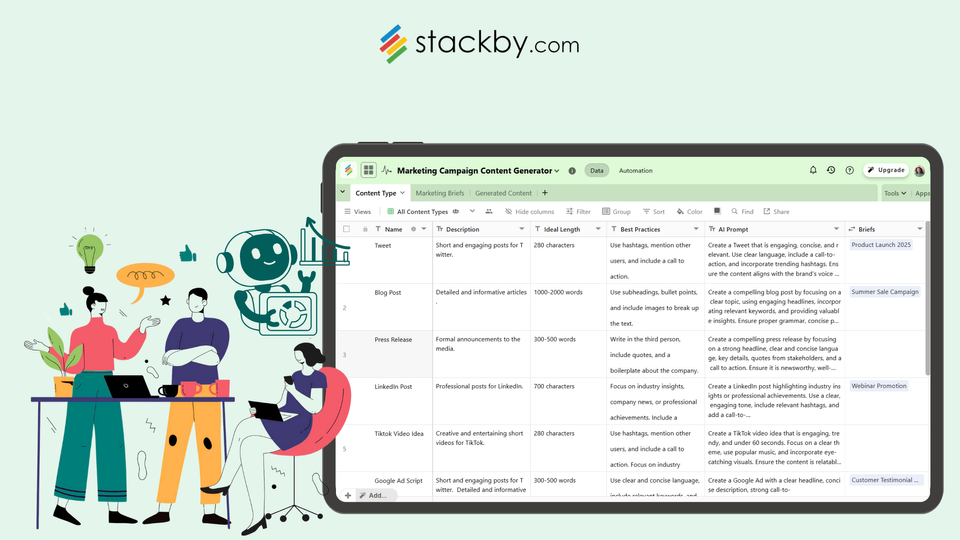
Or a content agency that ditched a chaotic mix of spreadsheets. Writers see their assignments. Editors approve in one click. An automation fires when content is ready for the client. The project manager stopped chasing status updates by email entirely.
Then there's the 3-person HR team. They automated their onboarding workflow so every new hire gets the right documents, intro emails, and equipment requests at the right time - triggered automatically. What used to take two hours of manual coordination now runs itself.
None of these required a developer.
Top Platforms Worth Knowing
A lot of tools claim to support this kind of work. Here's an honest breakdown of what's actually useful:
Honest callouts. Airtable's free tier hits a row limit faster than you'd think - and then you're at $20 per user before your team has built anything genuinely useful. That jump feels disproportionate. Zapier's 100 free tasks per month is borderline useless for anything beyond a quick test. (I've seen teams burn through it in a single afternoon during setup.)
Stackby starts at $5/user/month with a free tier that doesn't immediately box you in. For teams evaluating the best vibe solutioning platforms on a real budget, that gap is hard to overlook.
How Stackby Helps With Vibe Solutioning
Stackby was built for non-technical teams with real operational problems and no engineering budget to fix them. Not developers. Not consultants. Actual teams with actual backlogs.
Here's what makes it the right environment for this kind of work specifically:
- Relational databases with a spreadsheet interface. Link tables, pull related data, and build structured views without touching a foreign key. The learning curve is real - but it's short.
- Native AI columns. Run AI tasks directly on your data inside the platform. Summarize entries, classify leads, extract fields from notes. No external integration required.
- No-code automations. Set triggers based on data changes, form submissions, or time schedules. Build multi-step workflows without opening an API doc.
- Multiple view types. Grid, kanban, calendar, gallery, form - switch based on what your team needs to see. Same data, different lenses.
- Pre-built templates. The template library covers CRM tracking, project management, content planning, HR onboarding, and more. You're not starting from scratch.
- Integrations. Connect to the tools your team already uses - see the full integrations list - without rebuilding your workflow from zero.
If your team is currently duct-taping four separate apps together to do what one structured platform could handle, this is worth a serious look. The vibe coding for business crowd often focuses on the technical build side. This platform is built for the operational side - which is where most broken things actually live.
Start your free trial at Stackby - no credit card required.
Frequently Asked Questions
What is vibe solutioning?
It's the practice of solving a real business problem using AI and no-code tools by describing the outcome you want in plain language, rather than writing code or hiring a developer to build the solution. You describe the intent. The platform helps you build toward it. It's used to build solutions for your business, not tools.
How is it different from vibe coding?
Vibe coding generates actual source code from natural language. It's still a developer-adjacent activity. This approach skips the code entirely. The output is a working workflow, database, or automated process inside a no-code platform - not a codebase someone needs to maintain.
Do you need any technical skills to get started?
Not in any meaningful sense. You need to describe problems clearly and be willing to learn the basics of whichever platform you choose. Most serious tools in this space are designed to be picked up without formal training - a few hours of exploring gets most people operational.
Is this only for small businesses?
No. Mid-sized companies use this approach for internal tooling, reporting dashboards, and workflow automation across departments. Where it genuinely has limits is replacing custom public-facing software or highly complex system integrations. For internal operations? It scales further than most teams expect.
Which platform is the best starting point?
For most teams, Stackby is the practical answer. The free tier is workable, the pricing doesn't escalate aggressively as you grow, and the combination of database structure, AI features, and automations covers the majority of operational use cases in one place - without needing multiple subscriptions.
Can this actually replace a developer?
For internal tools, automated workflows, and custom reporting - often, yes. For public-facing apps, complex APIs, or custom software products, you'll still need engineering help. A useful rule: if the solution runs inside your team, this approach can probably handle it.
Conclusion
The way operational problems get solved is changing. You don't need a developer to fix a broken onboarding flow or build a lead tracking system. You need a clear description of the problem and the right environment to work in.
Stackby gives you that environment. Start free this week and see how much of what's sitting on your "waiting for IT" list you can actually close yourself.