Agentic AI Workflows: How No-Code Platforms Are Enabling Autonomous Business Systems
Discover how agentic AI workflows are transforming modern businesses by enabling autonomous systems without coding. This guide explores how no-code platforms empower teams to build self-operating workflows, automate decision-making, and scale operations efficiently in 2026.
Over the past few years, businesses have been automating tasks wherever possible. Email reminders, CRM updates, marketing campaigns, and approval processes have slowly moved from manual work to automated workflows.
But automation was only the first step. What’s emerging now is something much more powerful: agentic AI workflows. The AI systems that don’t just execute predefined steps but actively interpret data, make decisions, and trigger actions across tools.
In this blog, we’ll look at how AI-driven workflows are evolving into autonomous systems and how no-code platforms like Stackby are making this shift accessible to everyday teams.
By the end, you’ll have a clear view of how workflows are moving from “set it and forget it” automation to systems that actually think through operations.
According to survey from Market.us, the global Agentic AI Workflows market was valued at USD 5.2 billion in 2024 and is now projected to reach USD 227 billion by 2034, growing at a 45.8% CAGR.
What Are Agentic AI Workflows?
At a simple level, agentic AI workflows are workflows where AI doesn’t just assist, but it participates in decision-making. Agentic AI refers to systems that can independently perform tasks toward a defined goal. It does not execute a rigid sequence of steps, instead it evaluates information, determines what needs to happen next, and takes action.
Traditional automation follows fixed rules: for example, "if a new lead enters the CRM → send a welcome email."
But agentic workflows go a step further:
- Analyze the lead’s company size and industry
- Score the lead based on historical conversion data
- Allocate it to the right sales rep
- Generate a personalized outreach message
- Schedule follow-up reminders
This is possible because AI inside these systems can:
- reason through inputs
- understand context (not just raw data)
- generate outputs dynamically
- adapt decisions based on conditions
This is where AI workflows start to move from simple automation toward autonomous execution.
What Makes a Workflow Truly “Agentic”?
Not every AI-powered workflow is agentic. The difference comes down to three capabilities.
1. Reasoning
The system evaluates inputs before acting.
Example:
Instead of assigning every lead equally, AI determines which leads are worth prioritizing.
2. Context Awareness
The workflow understands why something matters.
Example:
A “high-value lead” is not just based on form data but industry, company size, intent signals, and past patterns.
3. Memory (Structured, Not Magical)
The system works on stored data and past interactions.
Example:
Past conversions, previous conversations, and historical performance influence current decisions.
When these three elements combine with automation, workflows stop being reactive and start becoming decision-driven systems.
Why Businesses Are Moving Toward Autonomous Workflows
The growing interest in agentic AI isn’t just hype. It’s being driven by very real operational pressures.
(i) Teams are scaling without proportional hiring
Startups and mid-sized companies often run lean teams. Marketing, sales, operations, and product teams handle increasing workloads without significant headcount growth.
Agentic AI workflows allow teams to scale execution without adding complexity.
(ii) Operations now span across multiple tools
Businesses now operate across multiple tools: CRM systems, marketing platforms, project trackers, analytics dashboards, and support software. Manually syncing everything leads to delays and errors.
Agentic AI workflows act as a layer that connects and operates across these tools.
(iii) Speed is now a competitive advantage
In many areas of business, speed has become a competitive advantage. Whether it's responding to leads quickly, launching campaigns, or resolving customer support issues, faster execution directly impacts revenue and outcomes.
Agentic AI workflows enable real-time decisions instead of queued tasks waiting for human intervention.
The Rise of No-Code Agent Systems
Until recently, building AI-powered systems required dedicated technical teams such as data scientists, machine learning engineers, and significant infrastructure - just to experiment with intelligent workflows. That naturally limited these capabilities to larger tech companies.
Today, no-code platforms have changed that. Instead of writing scripts or training models from scratch, teams can:
- design workflows visually
- define logic using conditions
- embed AI into data fields
- trigger actions across tools
And they can do it all without relying on developers.
Platforms like Stackby bring all these elements together in a structured way. By combining databases, automations, integrations, and built-in AI capabilities, they allow business users to move beyond using tools and start building systems that actually run their operations.
This shift matters more than it seems. From “using tools” → to building systems that run your operations.
Because most business processes don’t need complex machine learning models. They need clean, structured data, clear logic, and the ability to act on information in real time. When all of this exists in one place, workflows stop being a collection of tasks and start behaving like coordinated systems.
And that’s exactly what makes building agentic AI workflows possible without writing code.
How Agentic Workflows Actually Work
Most agentic workflows follow a layered structure:
1. Data Input Layer
The workflow starts when new information is added. This could come from:
- a form submission
- a CRM entry
- a spreadsheet update
- an external integration
2. Intelligence Layer
Instead of immediately triggering an action, the system first evaluates the data. Agentic AI then analyzes, classifies, summarizes, or generates outputs.
3. Decision Layer
Based on the AI output and predefined logic, the workflow determines the next step.
4. Action Layer
The system may then update records, send notifications, trigger integrations, assign tasks or generate content.
When multiple AI steps and automation rules work together, the workflow behaves much like a digital operator running the process.
Where Agentic AI Workflows Show Up in Real Businesses
The concept of Agentic AI may sound vague, but it is already being used in many business processes.
Marketing operations
Marketing teams are in charge of a large volumes of campaign data, content workflows, and performance tracking. Agentic AI workflows can analyze campaign results, generate content drafts, sort leads, and automatically update dashboards.
Sales and CRM systems
Sales pipelines benefit heavily from intelligent workflows. Agentic systems can qualify leads, rank opportunities, write outreach drafts, and make sure that follow-ups never get missed.
Customer support
Support teams often deal with repetitive requests. AI workflows automatically sort tickets, summarize conversations, suggest responses, and escalate complicated issues up the chain of command.
Operations and project management
Operations teams keep track of tasks, approvals, deliverables, and deadlines. Agentic workflows monitor progress, find bottlenecks, and trigger alerts or reassign tasks when things fall behind.
Why Most AI Automation Still Fails
Many AI workflows fail not because of bad AI features, but because of poor system design.
1. Unstructured data
If your data is messy, AI outputs will be inconsistent.
2. Disconnected tools
Workflows break when systems don’t communicate properly.
3. Over-reliance on single-step automation
Many setups stop at “AI generates something” instead of building full workflows around it.
Agentic workflows solve this by combining:
- structured data
- connected systems
- multi-step execution
How Stackby Enables AI Workflows
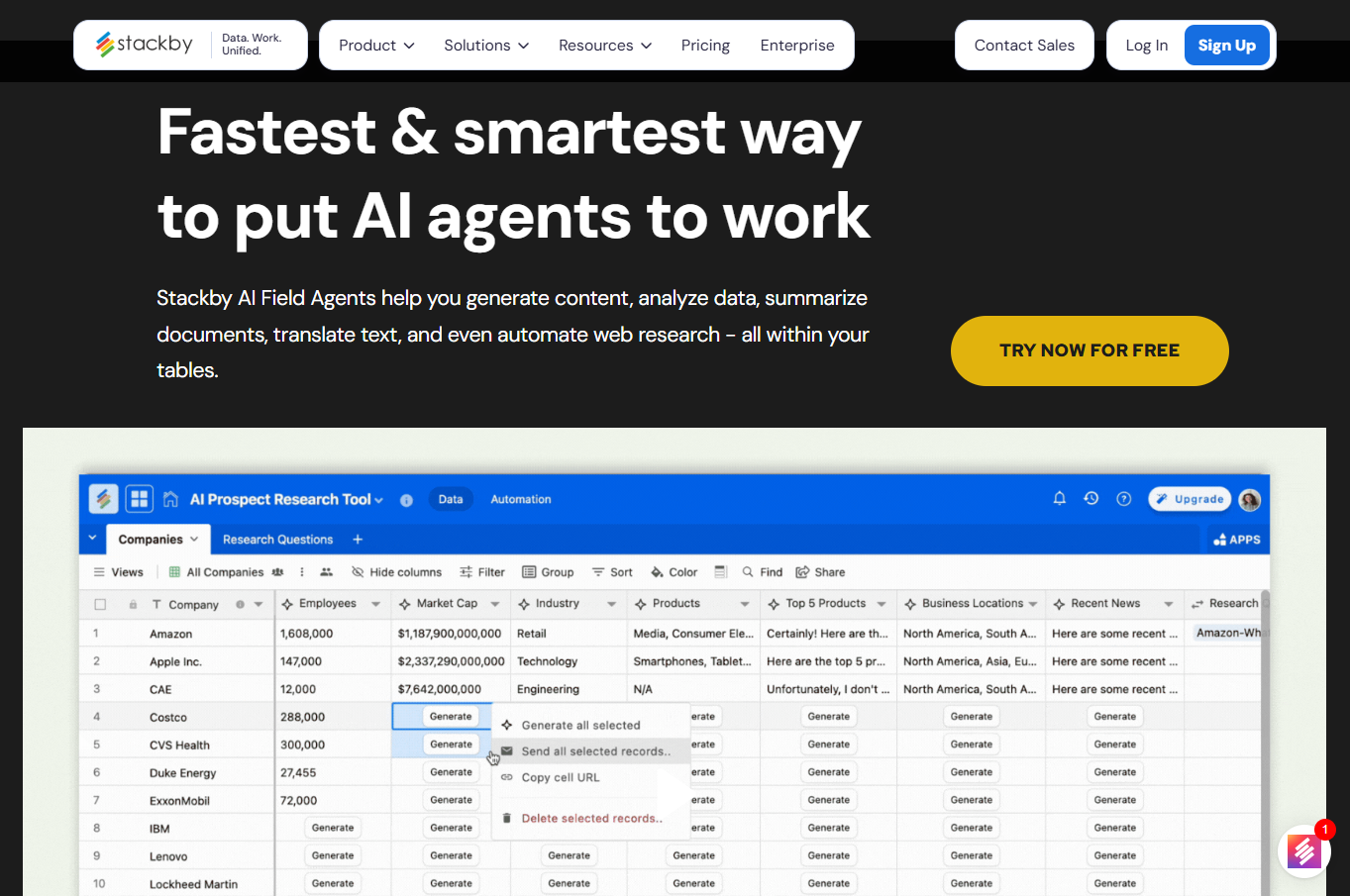
This is where Stackby becomes more than just a no-code data tool. It acts as a foundation for building agentic AI systems by combining three key elements:
- structured databases
- workflow automation
- embedded AI capabilities
This helps teams to build workflows where data, logic, and AI operate in the same environment instead of using separate tools for each layer.
AI Co-Builder: Creating Systems Faster
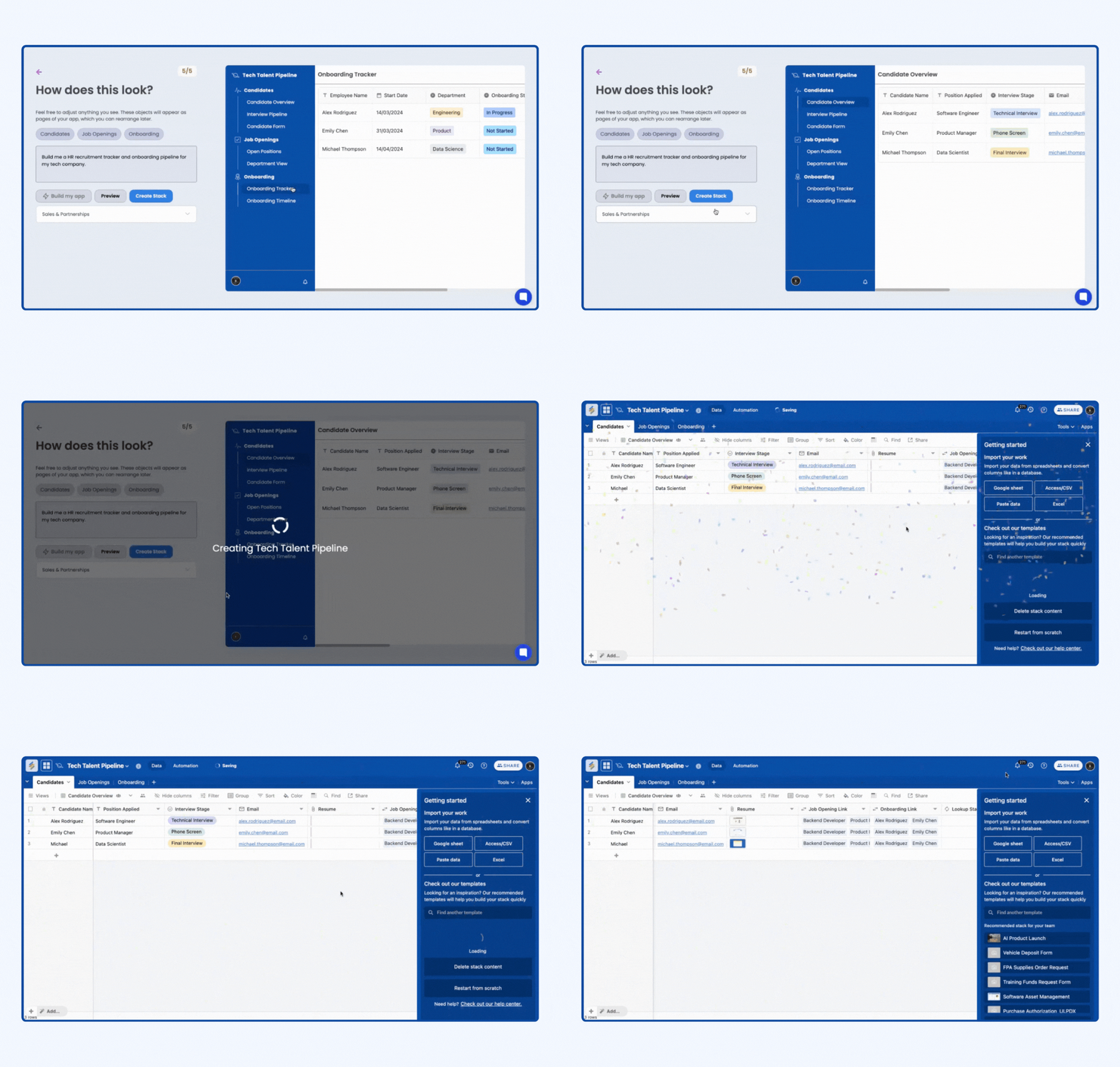
Instead of manually building databases and workflows, the AI Co-Builder helps generate structured systems from simple prompts. You describe what you need, and the base - tables, fields, structure, is created instantly. This removes one of the biggest bottlenecks in workflow design.
AI Fields: Intelligence Inside Data
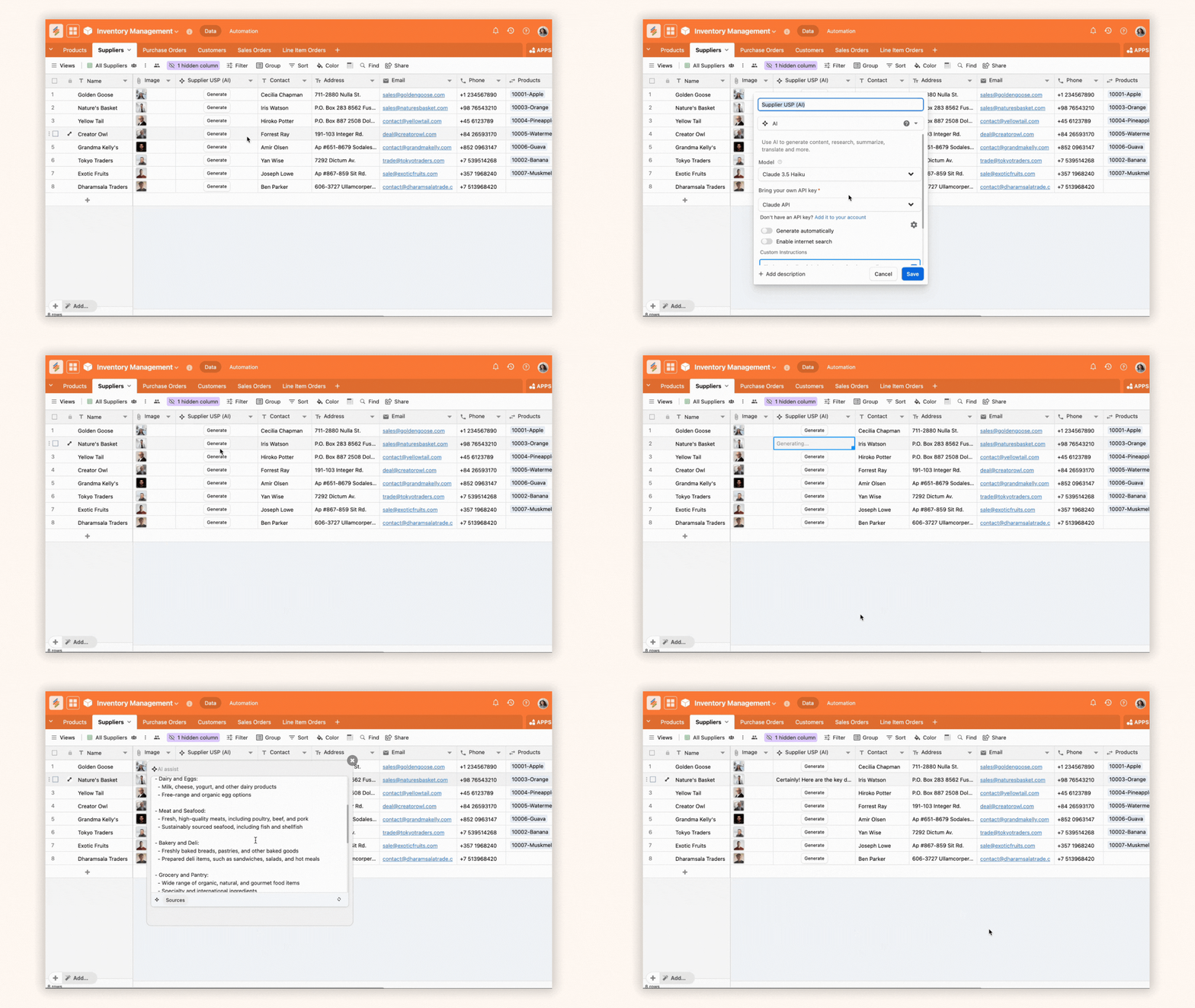
AI Fields bring reasoning directly into the database columns. These fields can analyze text, categorize records, extract key insights, or generate content. This means every new record can trigger intelligent processing automatically.
Automations: Turning Decisions into Actions
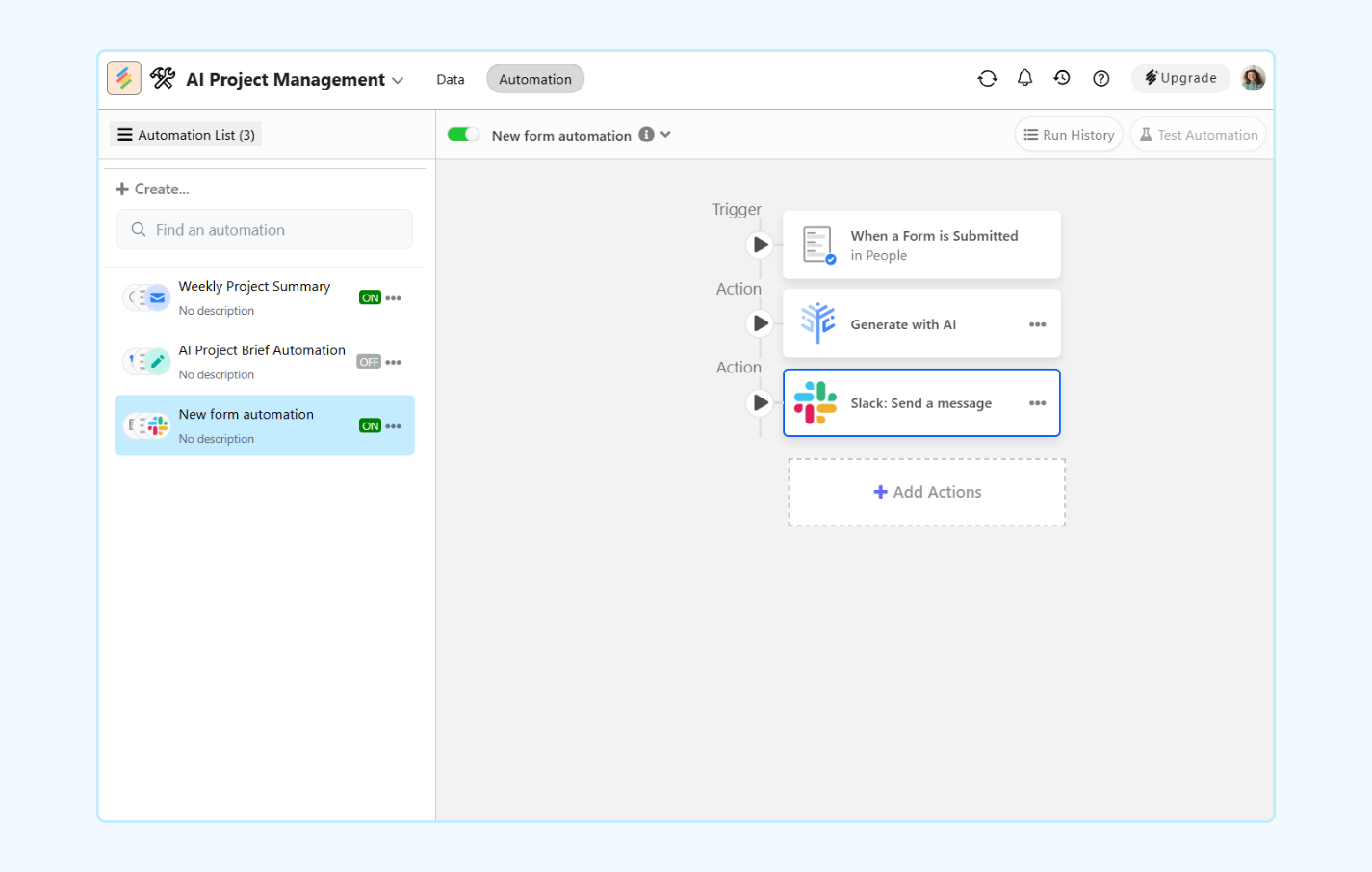
Stackby’s internal automation engine allows workflows to respond instantly to changes. Combined with AI, this creates decision → action loops (such as updating data, sending notifications, or initiating integrations), which are essential for agentic systems.
Integrations and APIs: Operating Across Tools
Workflows don’t exist in isolation. Stackby connects with external tools, allowing workflows to update CRMs, trigger notifications, sync data or run cross-platform actions. This is where agentic workflows become multi-system operators.
Templates and structured workflows
Pre-built templates also make it easier for teams to deploy operational systems quickly without building everything from scratch.
Together, these elements allow teams to design workflows that behave more like autonomous operational systems rather than simple task automation.
Example of Building an Agentic Lead System in Stackby
To see how this works in practice, imagine a lead qualification workflow built inside Stackby. A new lead enters via a form or integration, then the system triggers Stackby's AI Field that analyzes the company description and website.
The AI then extracts useful information such as:
- industry
- company size
- potential use case
- urgency indicators
Based on these insights, the system assigns a lead score and updates the CRM status automatically.
High-value leads may trigger additional steps:
- a personalized outreach email draft generated by AI
- an alert sent to the sales team
- a follow-up reminder scheduled in the pipeline
Lower-priority leads might be routed into a nurture sequence instead.
The entire process runs automatically while still allowing the team to monitor and adjust the workflow as needed.
The Future: Multi-Agent Business Systems
Agentic workflows are only the beginning.
As AI capabilities continue to evolve, businesses are likely to move toward multi-agent operational systems, where different AI components manage different parts of a process.
- one agent might analyze data
- one might generate content
- one might manage prioritization
- one might handle communication
Individually, these aren’t new capabilities and may sound like isolated automations. But when these agents operate together within structured workflows, they begin to resemble a small digital operations team working alongside humans.
Platforms like Stackby, that combine data, automation, and AI will play an important role in enabling these systems, where these “agents” can interact without breaking the flow.
For business organizations, the future won’t be about replacing human teams. Instead, it will be about giving teams AI-powered operational infrastructure that removes repetitive work and accelerates execution.
Final Thoughts
Automation helped businesses eliminate repetitive tasks. Agentic workflows take that idea one step further. Agentic AI workflows go further by introducing decision-making into the system itself. Instead of relying on fixed rules, workflows can now interpret data, adapt to context, and trigger intelligent actions across tools.
The best part is that this capability is no longer limited to large technical teams. Nocode platforms like Stackby make this shift practical by combining structured data, AI capabilities, and workflow automation in one place.
For teams looking to scale without adding operational complexity, this isn’t just a trend. It’s the direction modern business systems are already moving toward.
![Best 14 HR Database Software for Recruitment Agency [Free+Paid] [2026]](/blog/content/images/size/w960/2024/04/stackby--hr-database-software-blog-post-5.3.jpg)
![A Simple Guide on Workflow Management Software [Updated 2026]](/blog/content/images/size/w960/2021/12/work-management-blog.png)
![Step by Step Guide on How to Build Forms in a Database [2026]](/blog/content/images/2022/03/form-database-blog.png)