How to Use AI to Improve Your Product Strategy: Feedback, Launch & Competitive Insights
AI is transforming how product teams make decisions. In this guide, discover how to use AI for customer feedback analysis, product launch planning, and competitive research to build smarter, faster, and more successful product strategies.
Why Product Strategy Feels Harder Than It Used to Be
Building a product today feels different. Users talk back instantly. Competitors copy fast. Features age quickly. Many product teams rely on gut feeling, scattered feedback, and delayed reports. That creates slow decisions and missed signals.
This is where AI product management becomes practical. It helps teams understand users better, spot market gaps earlier, and plan launches with more confidence. AI does not replace product managers. It supports clearer thinking by connecting data, feedback, and trends in one place.
This guide explains how to use AI for product strategy in a simple, real-world way. We will look at feedback, analytics, competitive insights, and launch planning with examples you can relate to.
What AI Product Management Really Means in Practice
AI product management is not about adding buzzwords to roadmaps. It is about using smart systems to process large volumes of product data faster than manual work allows.
Product managers deal with many inputs every day. User reviews, support tickets, feature requests, usage data, churn signals, and competitor updates. AI helps organize these inputs and highlights patterns that matter.
When teams use ai tools for product managers, they gain clarity on what users want, why features succeed, and where strategy needs adjustment. Decisions feel grounded instead of rushed.
Using AI Product Feedback Tools to Understand Real User Needs
Customer feedback exists everywhere. Emails, chat logs, app reviews, surveys, and sales calls. The challenge is turning that noise into insight.
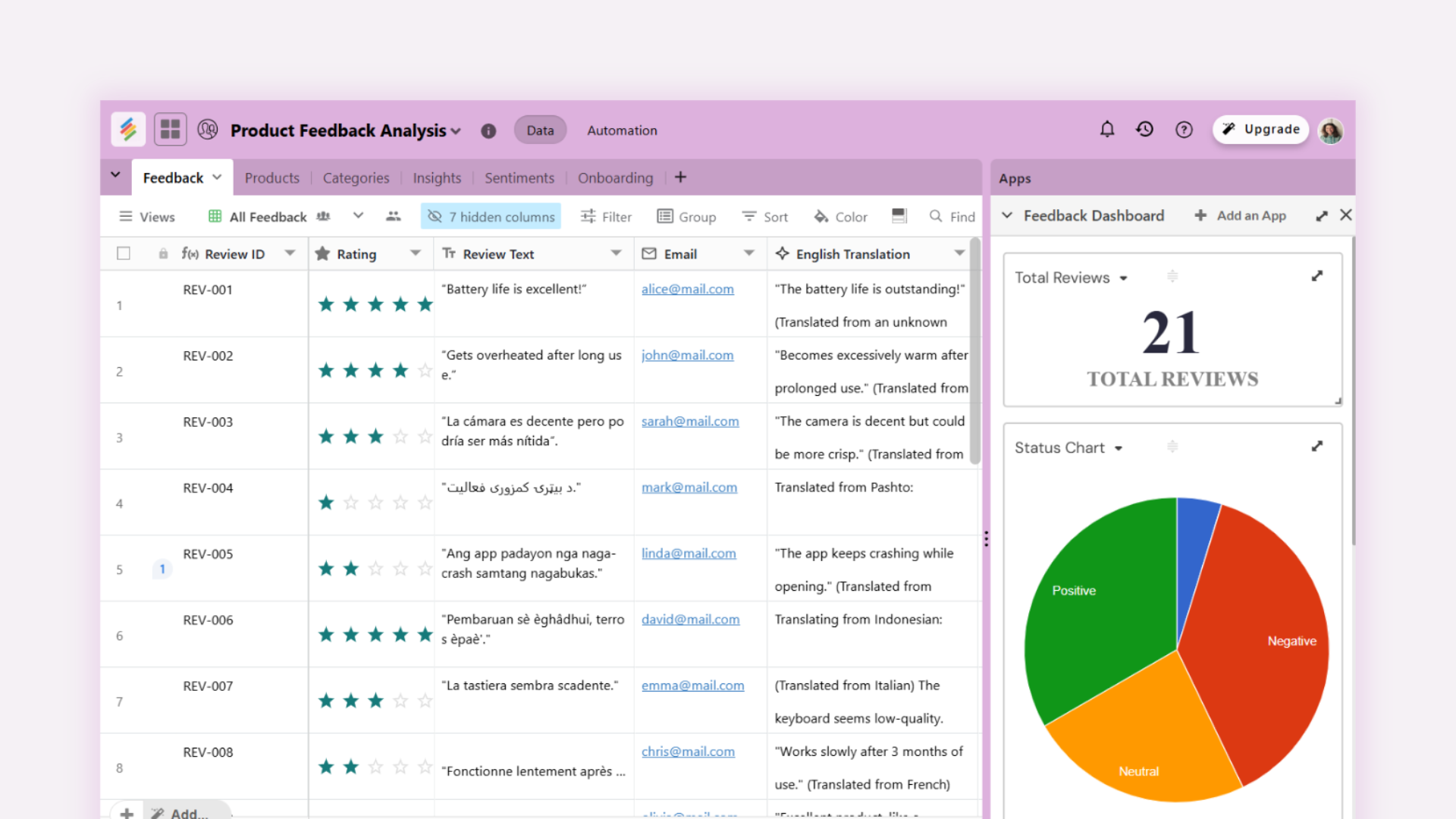
AI product feedback tools scan large feedback volumes and group them into themes. They identify recurring complaints, feature requests, and sentiment changes. This saves hours of manual tagging.
For example, instead of reading hundreds of reviews, AI highlights that users struggle during onboarding or request deeper analytics. This clarity helps product teams prioritize improvements that matter.
Many teams manage feedback using structured tables and workflows. Platforms such as Stackby help teams organize insights using connected templates where feedback sources, tags, and priority scores stay visible in one place. You can explore ready-to-use formats using stackby templates to manage feedback, roadmaps, and research without complexity.
Key benefits of AI-driven feedback analysis include:
- Faster identification of common user pain points across channels.
- Clear prioritization based on frequency and sentiment trends.
- Better alignment between product, support, and marketing teams.
How AI Product Analytics Improves Everyday Decisions
Product analytics often feels overwhelming. Dashboards show numbers without clear direction. AI adds context by explaining what changed and why it matters.
AI product analytics tools analyze usage patterns and detect anomalies. They surface insights such as drop-offs, feature adoption changes, and engagement shifts without waiting for manual reports.
Imagine noticing a decline in feature usage. AI highlights that users from a specific segment stop using it after a UI update. This insight supports faster fixes and prevents churn.
AI also helps forecast outcomes. It estimates how changes impact retention, conversion, and lifetime value. That makes strategy discussions more focused.
Ways AI analytics supports product strategy:
- Identifies hidden patterns in user behavior.
- Predicts outcomes of feature changes with data-backed confidence.
- Reduces time spent on manual reporting tasks.
AI Competitive Analysis Tools for Smarter Market Positioning
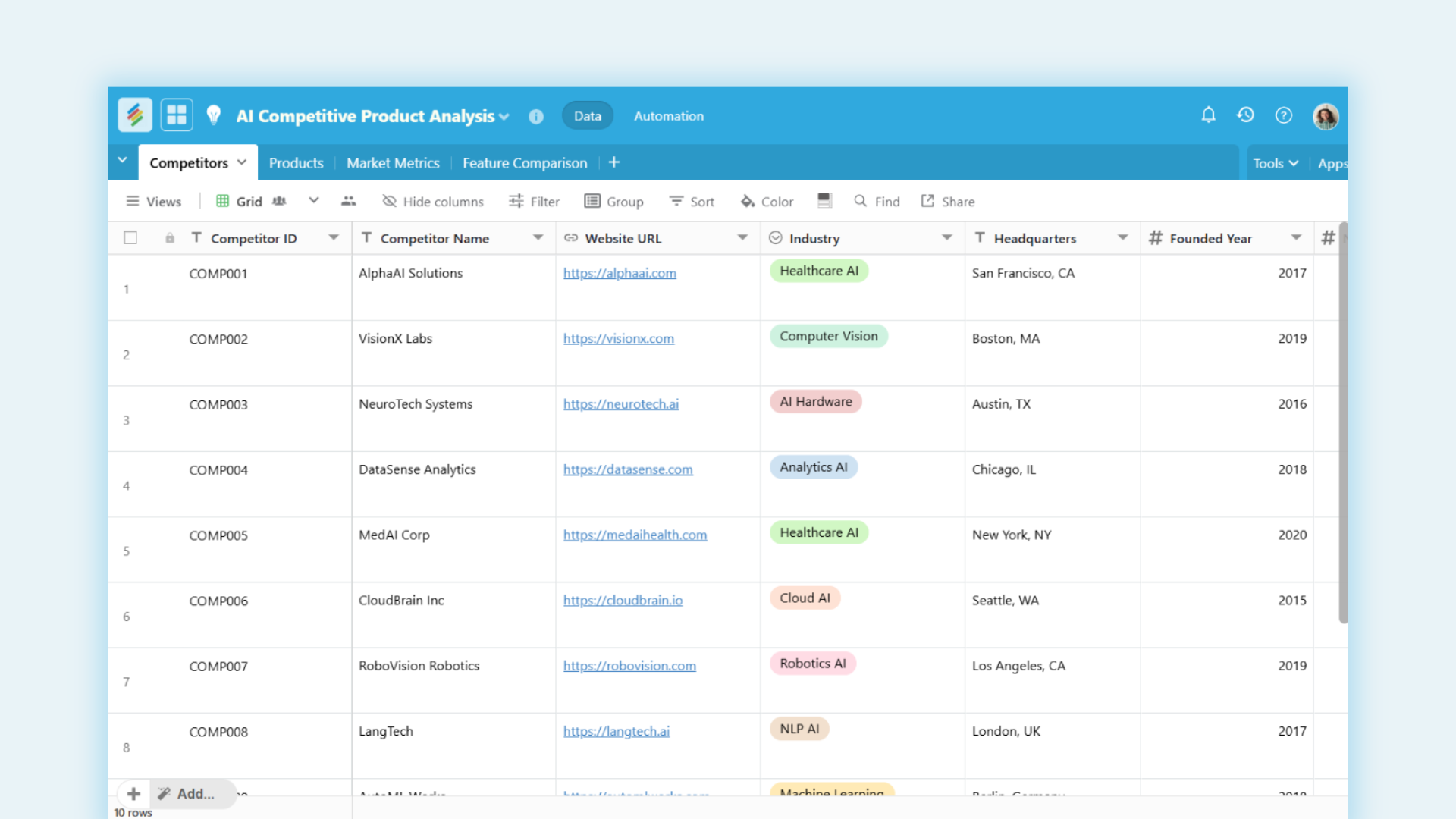
Competitive research often relies on scattered notes and outdated screenshots. AI changes this process by continuously tracking competitor activity.
AI competitive analysis tools monitor product updates, pricing changes, feature launches, and messaging shifts. They summarize trends instead of forcing teams to check multiple sources.
This helps product managers answer important questions. Which features competitors push aggressively. Where gaps exist. How fast markets evolve.
With ai for competitive product analysis, teams respond proactively. Instead of reacting after losing users, they adjust positioning early and refine value propositions.
Competitive insights also support internal alignment. Marketing, sales, and product teams work from the same intelligence instead of assumptions.
Planning Better Releases With AI for Product Launch

Product launches involve many moving parts. Timing, messaging, readiness, and risk management matter. AI supports each stage with structured insights.
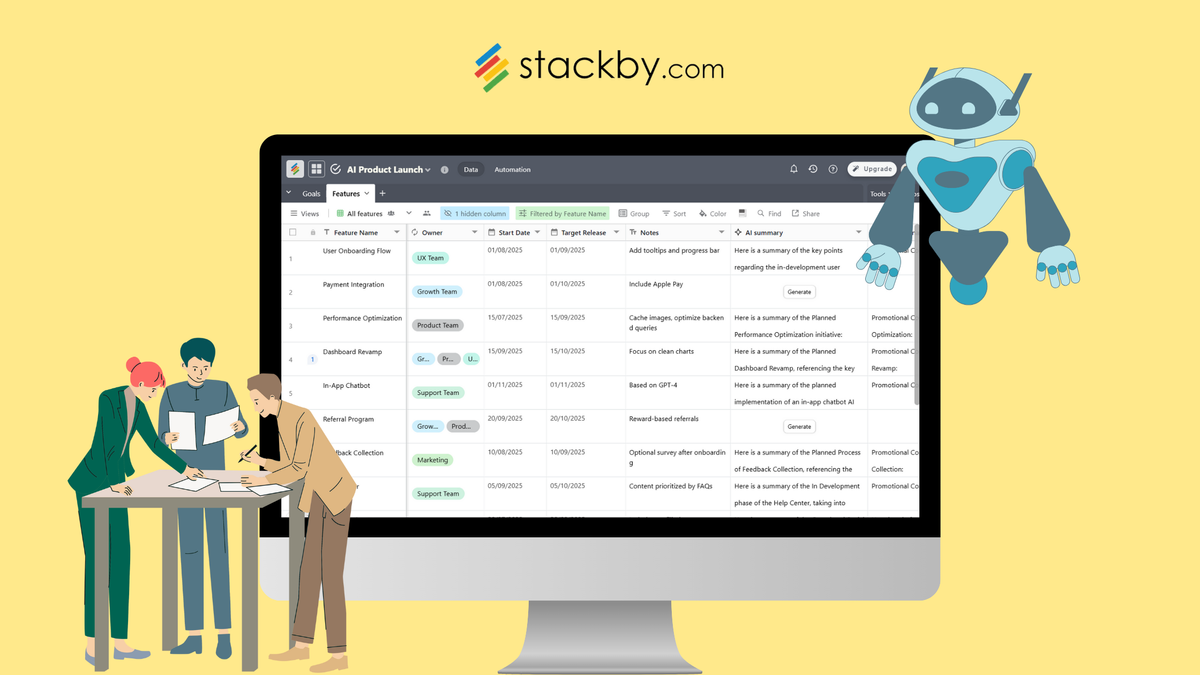
Using ai for product launch, teams analyze historical launches and predict outcomes. AI highlights launch patterns that worked and mistakes that caused delays.
AI also improves readiness checks. It reviews feedback signals, adoption readiness, and support capacity before release. This reduces rushed launches and surprise issues.
Common ways AI supports launch planning:
- Predicts launch success based on historical data.
- Identifies risk areas such as feature confusion or support overload.
- Aligns messaging with user needs discovered through feedback.
How to Use AI for Product Strategy Step by Step
Many teams ask how to start without overhauling systems. A gradual approach works best.
Here is a simple framework:
- Start by centralizing feedback and usage data into one workspace.
- Use AI tools to categorize feedback and detect behavioral patterns.
- Apply insights to roadmap discussions and sprint planning.
- Track competitive updates automatically instead of manual research.
- Review AI insights weekly to adjust priorities with confidence.
This approach shows how to use AI for product strategy without disrupting existing workflows.
Challenges and Limits of AI in Product Management
AI supports decisions but does not replace judgment. Models rely on historical data and patterns. Human context still matters.
AI struggles with early-stage products that lack data volume. It also reflects biases present in data sources. Product leaders must review insights critically.
The strongest teams combine AI analysis with user interviews, domain knowledge, and team discussions. AI enhances thinking instead of controlling it.
Conclusion: Building Smarter Products With AI Support
Product strategy becomes clearer when data, feedback, and insights connect naturally. AI product management helps teams move from guesswork to evidence-based decisions.
By using AI product analytics, AI product feedback tools, and AI competitive analysis tools, product teams gain a deeper understanding of users and markets. With AI for product launch planning, releases become more confident and measured.
The goal is not automation for its own sake. The goal is better products built with clarity, speed, and focus.
![A Simple Guide on Workflow Management Software [Updated 2026]](/blog/content/images/size/w960/2021/12/work-management-blog.png)
![Step by Step Guide on How to Build Forms in a Database [2026]](/blog/content/images/2022/03/form-database-blog.png)