How to Manage Your Video Production Pipeline in 2026
Managing video projects gets complex as teams scale. This guide explains how to build and manage a video production pipeline with better planning, workflows, and collaboration.

Video is an increasingly popular media formats for sales, marketing as well as training and internal communications. According to recent reports from the industry more than 85 % of businesses utilize video as a primary marketing tool. Teams regularly publish multiple videos across various channels. As the volume increases and teams face challenges with a lack of deadlines, unorganized documents, unclear approvals and multiple revisions.
This is when the management of a well-organized video production pipeline becomes crucial, and using a Video Production Planning & Tracking Template can help you structure each stage consistently.
A clear pipeline can help teams go from an idea to a final product without causing confusion. It also helps with better planning of video production, better collaboration, a smoother workflow, and more effective outcomes across campaigns.
Without a clear process for video creation, even the most skilled teams are unable to keep their time and work in a consistent manner. If you have the right framework and equipment, video production management is scalable and predictable.
At a glance
- A video production pipeline brings structure to planning, creation, and delivery
- Clear workflows reduce delays and repeated feedback cycles
- Video project management improves ownership and accountability
- Centralized tools help teams scale video output with less effort
What Is a Video Production Pipeline?
The video pipeline describes the entire path that a video takes from conception to delivery. It integrates production planning, planning review, publication, and production in a single, clear system. Each stage has a defined task as well as owners and timeframes.
In contrast to task lists that are scattered, the pipeline shows where each video is at any given time. This assists teams in avoiding delays and helps keep projects progressing. As teams grow, the video production pipeline can become the basis of consistent output.
If it is managed well, it can align creative work with the business objectives while facilitating collaboration between teams.
Video Production Process vs Video Production Workflow
Many teams use these terms interchangeably, but they serve different purposes.
Understanding the video production process
The video production process refers to the standard stages involved in creating a video. It usually includes ideation, scripting, filming, editing, and distribution. This process stays mostly the same across projects.
Problems arise when teams focus only on the process and ignore coordination. Tasks exist, but ownership and timing remain unclear.
How a video production workflow keeps teams aligned
A video production workflow defines how work moves between people during each stage. It answers questions like who reviews first, when feedback is shared, and how approvals happen.
A strong workflow supports the video production process by reducing confusion. It ensures that every step flows into the next without delay, which becomes essential when multiple videos run in parallel.
Mastering Workflow Management: A Complete Guide.
Why Video Production Management Matters
As video output increases, managing work manually stops working. Video production management helps teams control quality, timelines, and resources without stress.
It brings structure to creative work while leaving room for flexibility. Teams gain better visibility into progress and can make informed decisions faster.
Poor management often leads to missed deadlines, duplicated work, and inconsistent branding. Strong management avoids these issues by creating clarity and accountability across projects.
Key Stages of Video Production Planning
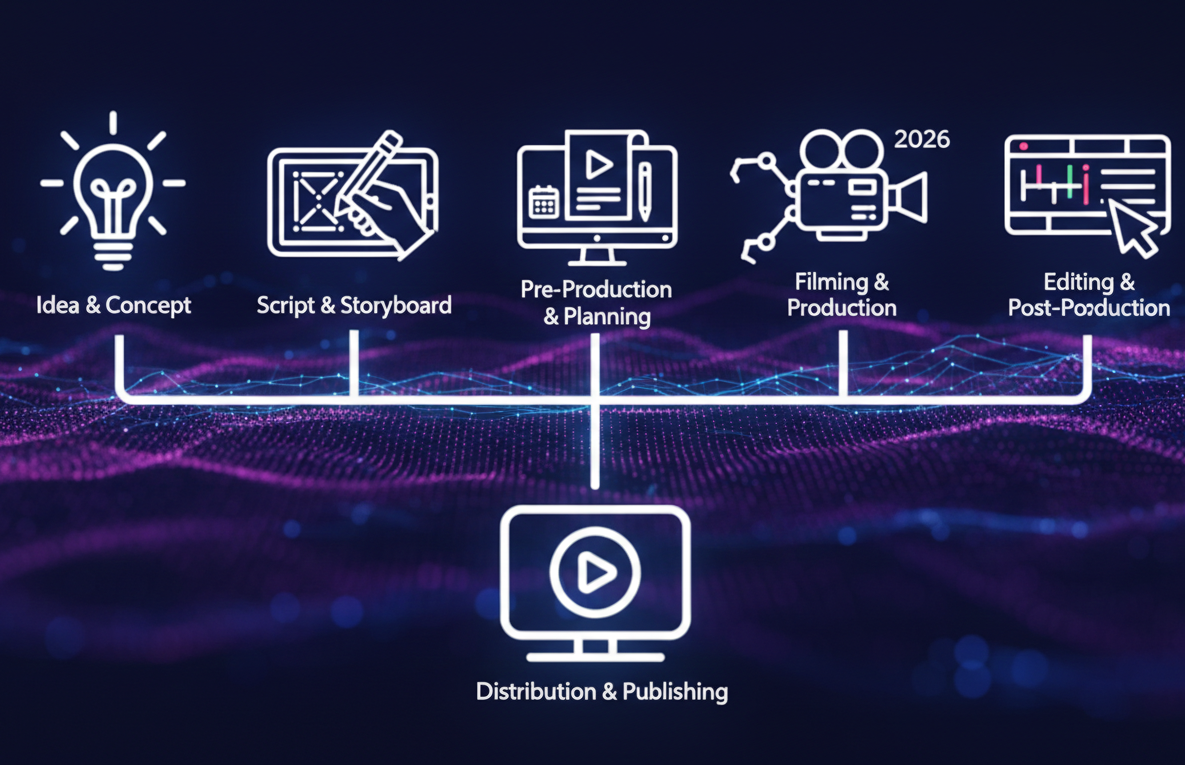
Effective planning sets the foundation for every successful video project and a structured schedule helps teams track ideas.
Pre-production planning
This stage focuses on defining goals, audience, messaging, and assets. Scripts, storyboards, timelines, and approvals are prepared here. Good planning prevents costly revisions later.
Production execution
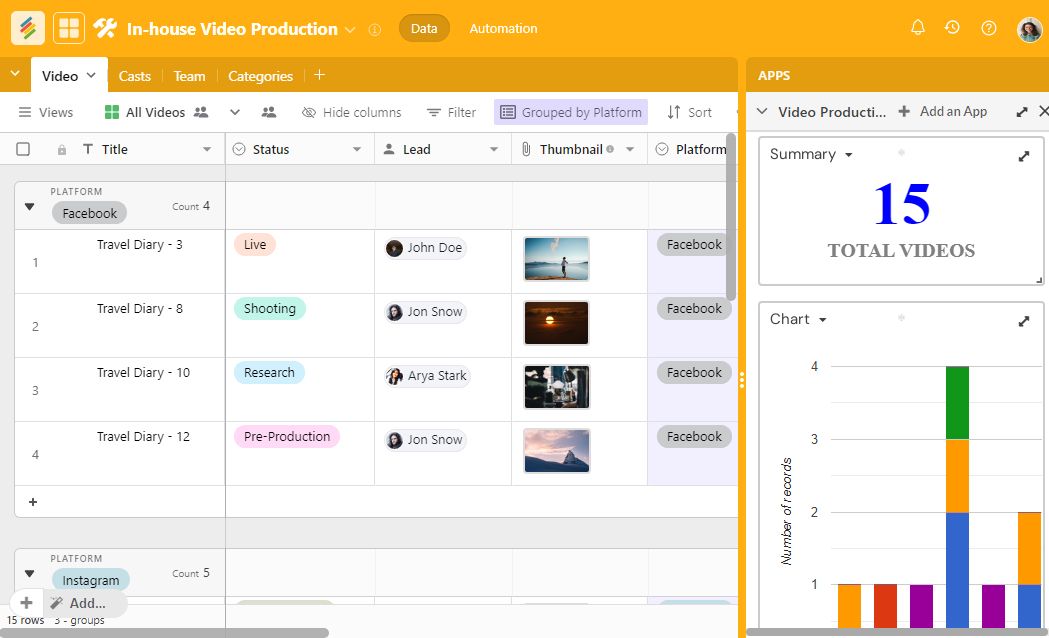
Production includes filming and asset creation, where an In-house Video Production Template can help you manage teams, schedules, and KPIs from one place. Coordination matters at this stage, especially when teams work across locations. Clear schedules and task ownership keep work moving smoothly.
Post-production and delivery
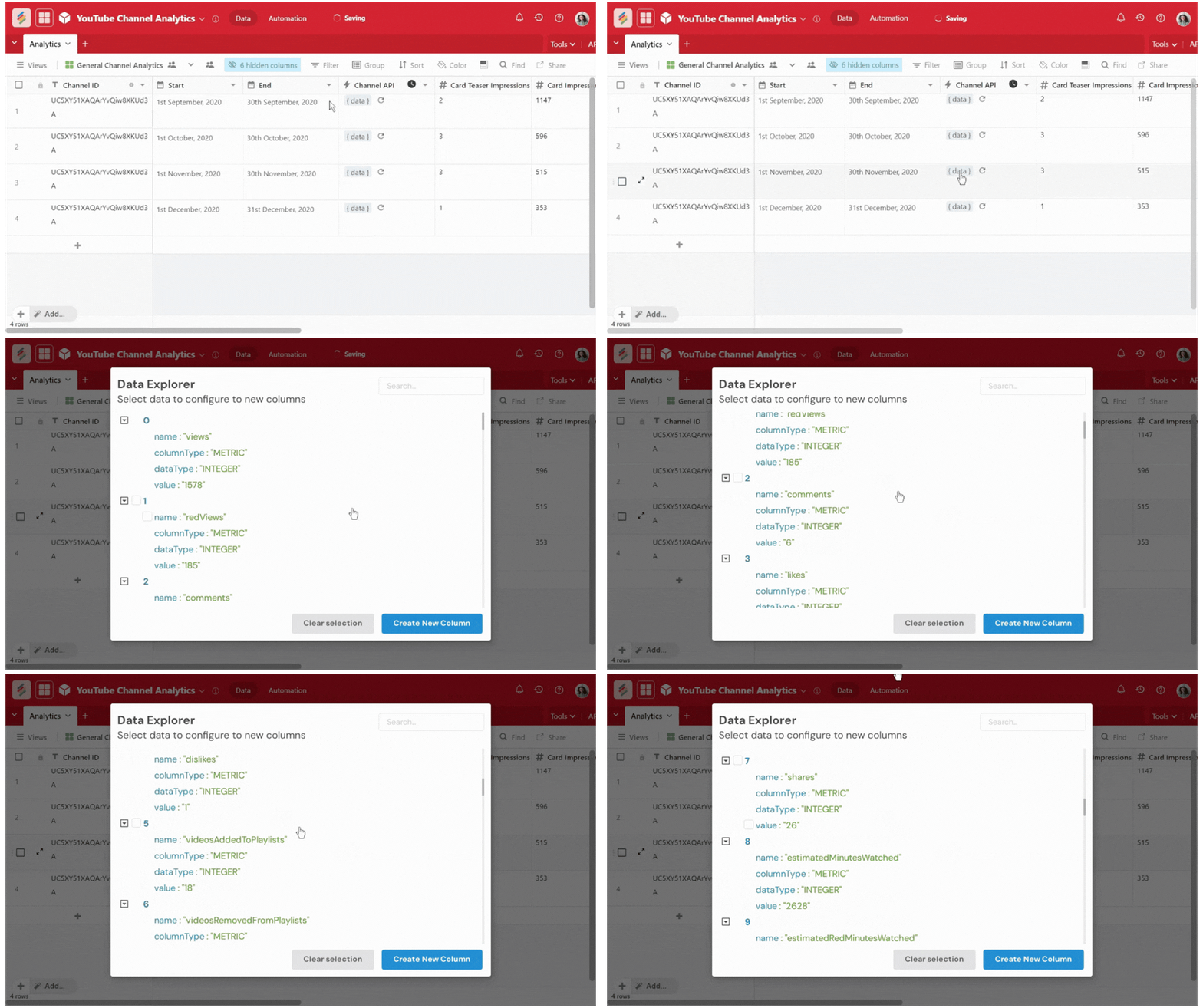
Editing, feedback, and publishing happen here, and you can also integrate with a YouTube Channel Analytics Template to track key performance metrics after publishing. A structured review process helps teams finalize videos faster without losing quality. This stage often determines how quickly content reaches the audience.
Strong video production planning connects all these stages into one continuous flow.
How to Manage Video Project Management Effectively
Video project management is focused on the tracking of individual video projects within the overall pipeline. Every project has deadlines, tasks, stakeholders and deliverables. In order to manage projects efficiently, teams require clarity more than complexity.
The clarity of ownership and visibility are more important than the most advanced features. When everyone knows what has to be done in the next step, projects can be completed faster.
In many industries, structured project tracking supports faster experimentation. For example, automotive marketing teams using data-driven workflows similar to ai agents for car dealerships benefit from clearer coordination between creative and performance teams.
Building a Scalable Video Production Pipeline
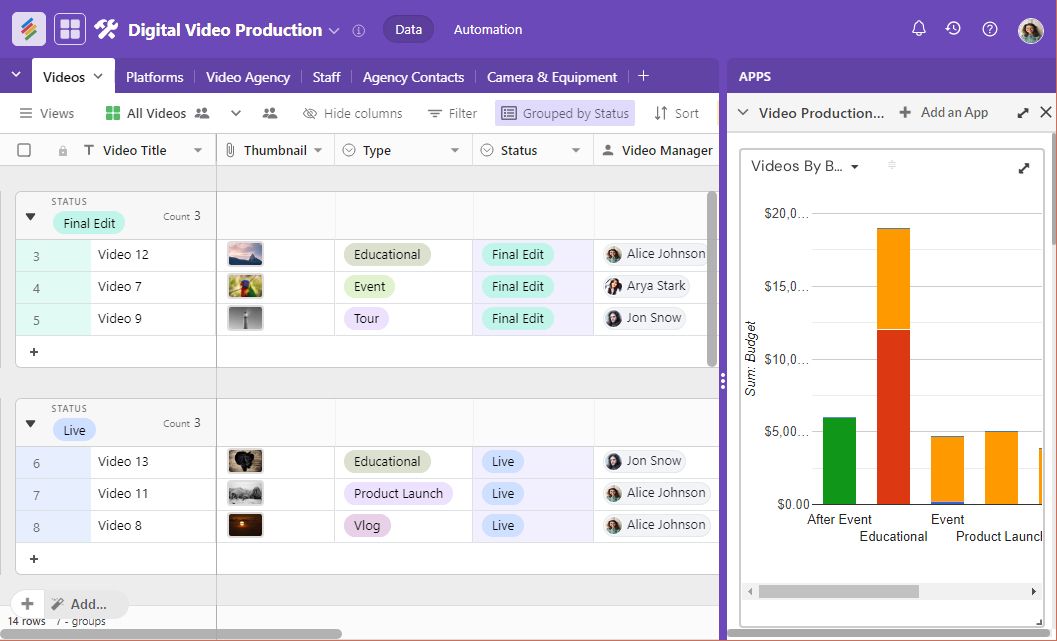
A pipeline that can be scalable supports expansion without adding chaos. This allows teams to create more videos, while ensuring the same quality and the sameness.
Begin by defining the steps that are applicable to the majority of projects, and consider using a Digital Video Production Template to centralize your video details and timelines in one system. It is important to record what happens during each step and who is accountable. Over time, analyze performance data and adjust the process.
Scalability comes from repetition with flexibility. The pipeline stays consistent while allowing adjustments for different video formats and goals.
How Stackby Helps Manage Your Video Production Workflow
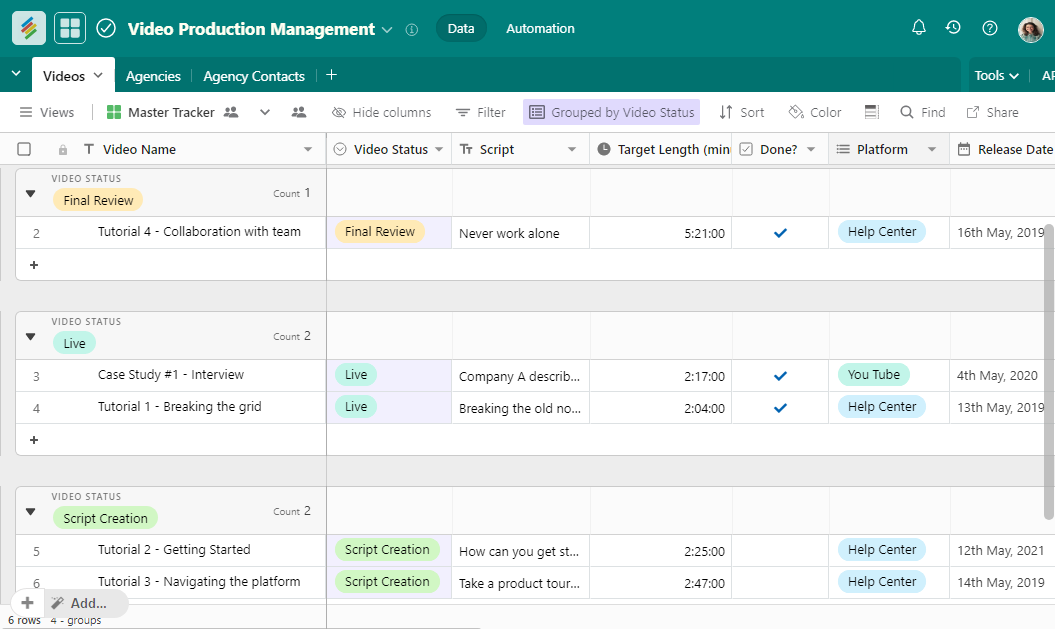
Managing video work often requires tracking ideas, tasks, assets, and feedback in one place. Many teams struggle because this information lives across documents, chats, and spreadsheets.
Stackby helps by bringing structure and flexibility together. Teams can design their own video production workflow using tables, fields, and views that match how they work. This allows planning, tracking, and collaboration without forcing rigid systems.
Because Stackby adapts to different workflows, teams can manage video production planning and tracking within a single workspace. This supports clarity while keeping creative freedom intact.
Using Stackby Templates for Video Production Management
Templates help teams move faster without starting from scratch. Stackby templates provide ready-made structures that teams can customize to their needs.
A video production pipeline template helps track progress from idea to publish. A video project management template supports ownership, deadlines, and reviews. Content calendar templates help align video planning with marketing goals.
These templates act as a foundation. Teams can adjust fields, views, and stages as their process evolves.
Best Practices to Streamline Your Video Production Process
Streamlining improves speed without sacrificing quality. Small changes often make a big difference.
- Standardize stages across most video projects
- Keep feedback centralized to avoid confusion
- Review performance data to refine workflows over time
Consistent improvement helps teams stay efficient as volume increases.
Conclusion
Managing your video production pipeline is no longer optional for growing teams. A clear structure supports better planning, smoother workflows, and reliable delivery.
By aligning video production process, workflow, and project management into one system, teams reduce friction and improve output. Tools that adapt to your process help maintain flexibility while adding clarity.
With the right approach, video production management becomes a strategic advantage rather than a constant challenge.