Stackby Year in Review : 2025 - AI Co-builder, AI Field, AI Templates
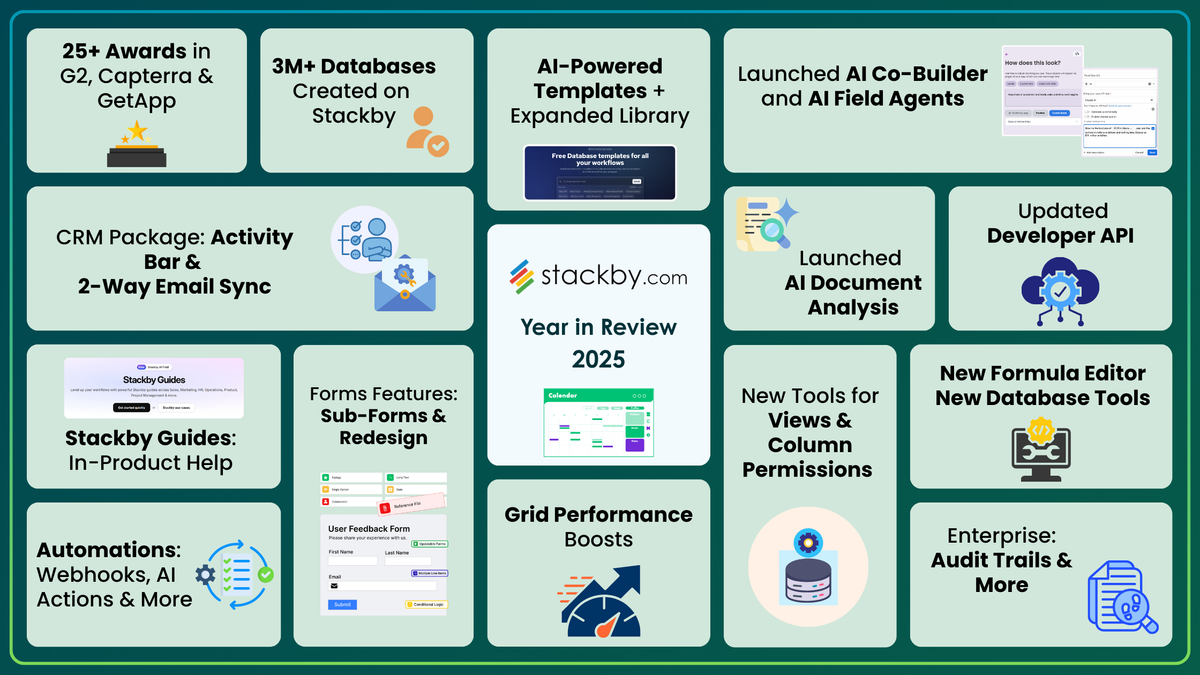
2025 was a landmark year for Stackby. From powerful AI-driven features and new templates to global customer growth and product improvements, here’s a complete recap of what we shipped and what’s ahead.
The Year We Rebuilt the Way Teams Work with AI!
Every year teaches us something. But 2025 didn’t just teach us, it transformed us.
It was the year AI stopped being a “future possibility” and boldly became the backbone of how modern teams think, build, automate, and scale their work. And for us at Stackby, it was the year we didn’t just keep up with the shift… we stepped into it with full responsibility, curiosity, and an obsession for solving real problems.
This is our year in review. Not as a company speaking to its users, but as a team speaking to its community : the people who shaped every product decision, every feature upgrade, every late-night release.
Let’s look back at 2025, the year we rebuilt Stackby around intelligence, speed, and a new meaning of what a database platform should feel like.
A Year Powered by AI and Driven by You
This year we moved from building tools to building intelligence into the way people work.
AI was everywhere, but more importantly, it was useful.
Not a buzzword. Not a checkbox feature. But something that could sit inside your workflows, understand your context, and help you move faster without breaking structure. And here’s how we brought that vision to life.
Launching AI Co-builder : The Beginning of Intelligent Databases
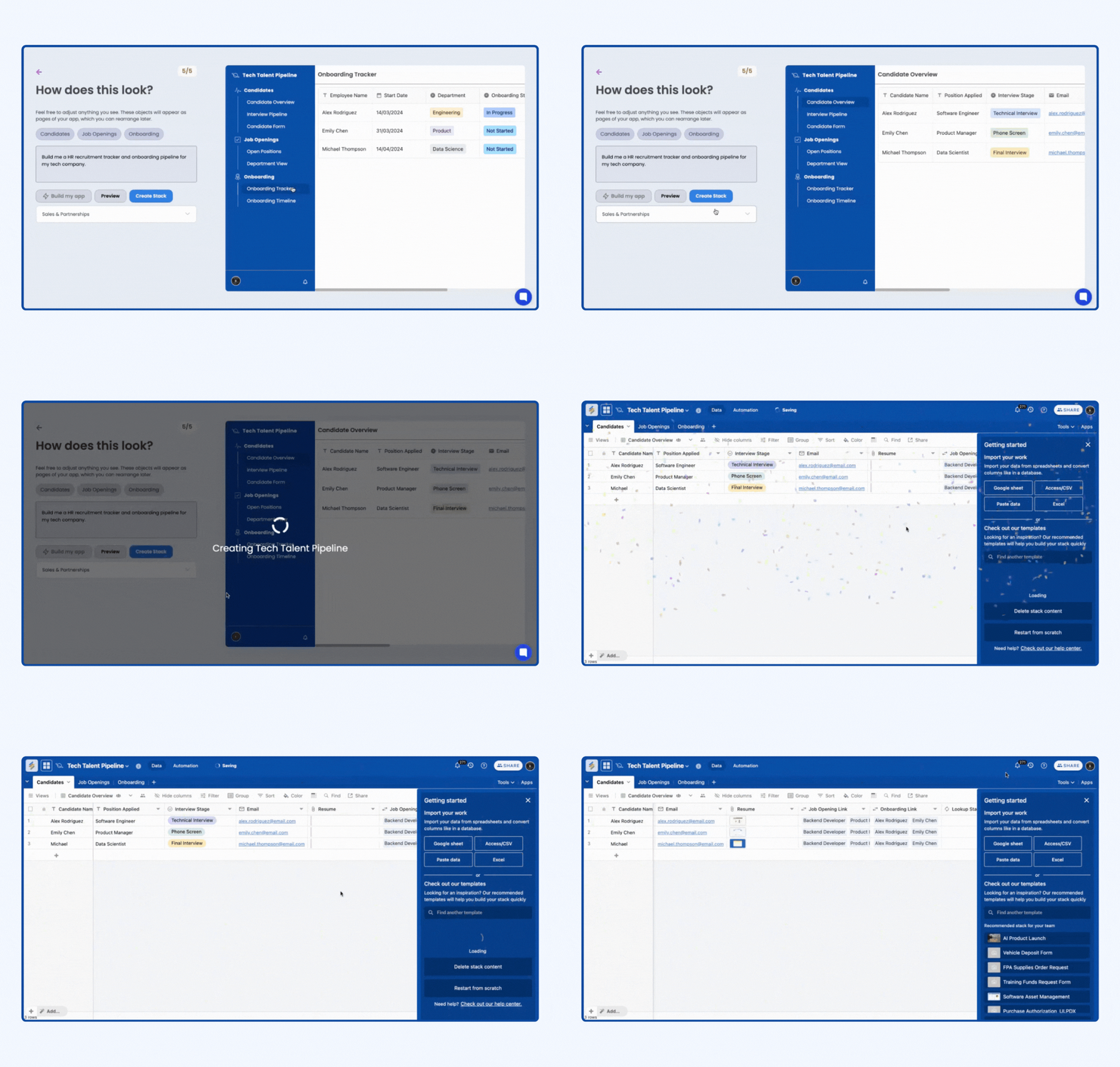
We started the year with our biggest leap: AI Co-builder.
For years, people have said, “I know what I want to manage, but I just don’t know how to build it.” So we removed the friction.
With AI Co-builder, teams could build entire databases with columns, views and automations using natural language. All a team needed to do was:
- Describe their workflow
- Pick a structure
- Get fields, tables, relationships, and views built for them
- Add automation suggestions
- Fine-tune everything as they grow
Marketers used it to spin up campaign hubs in seconds. Founders used it to structure chaotic data into order. Data analysts used it to quickly prototype datasets without touching schema scripts.
It changed the way people get started on Stackby. And for us, it set the foundation for everything else that followed this year.
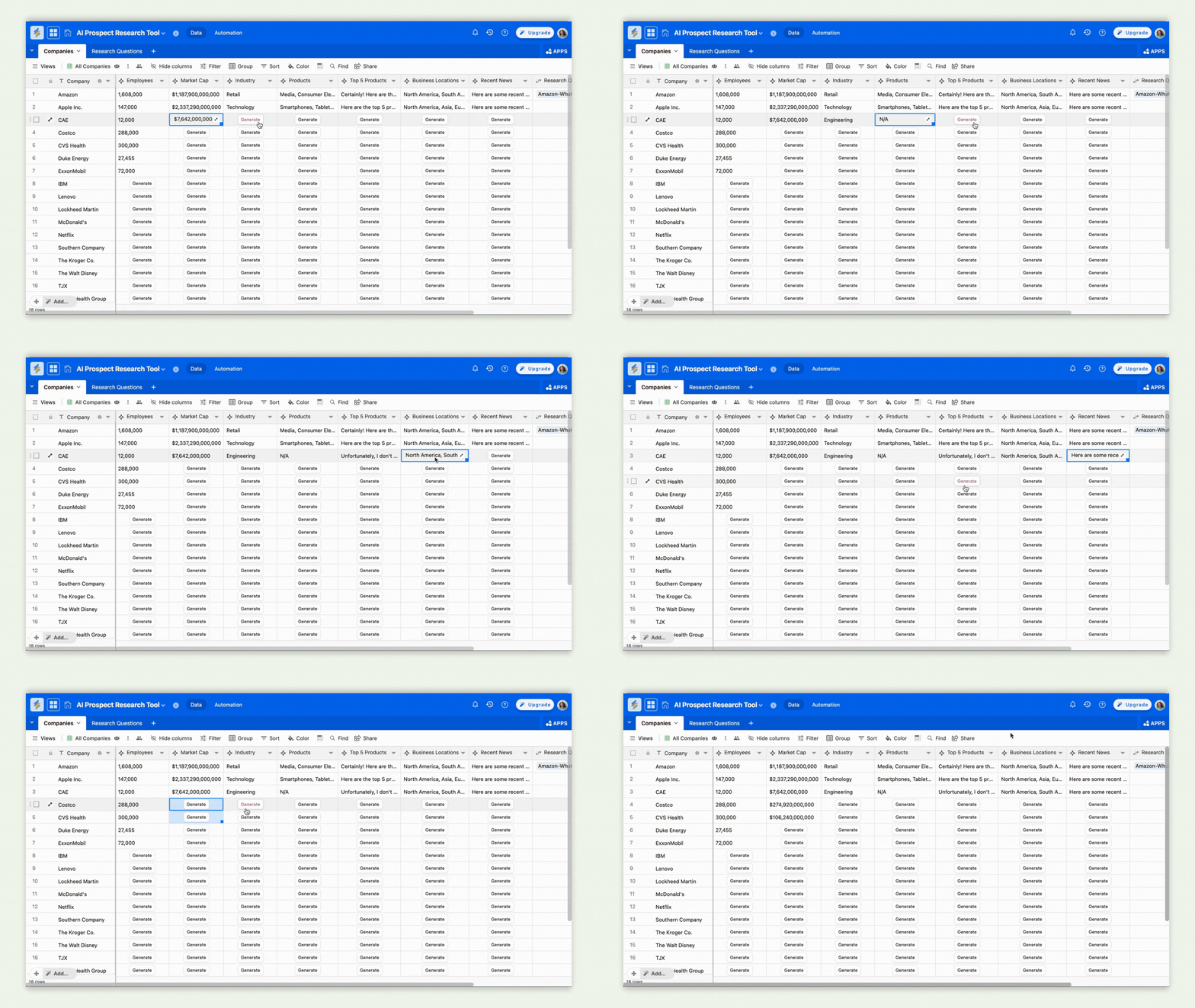
AI Field Agents : The Quiet, Reliable Helpers in Every Column
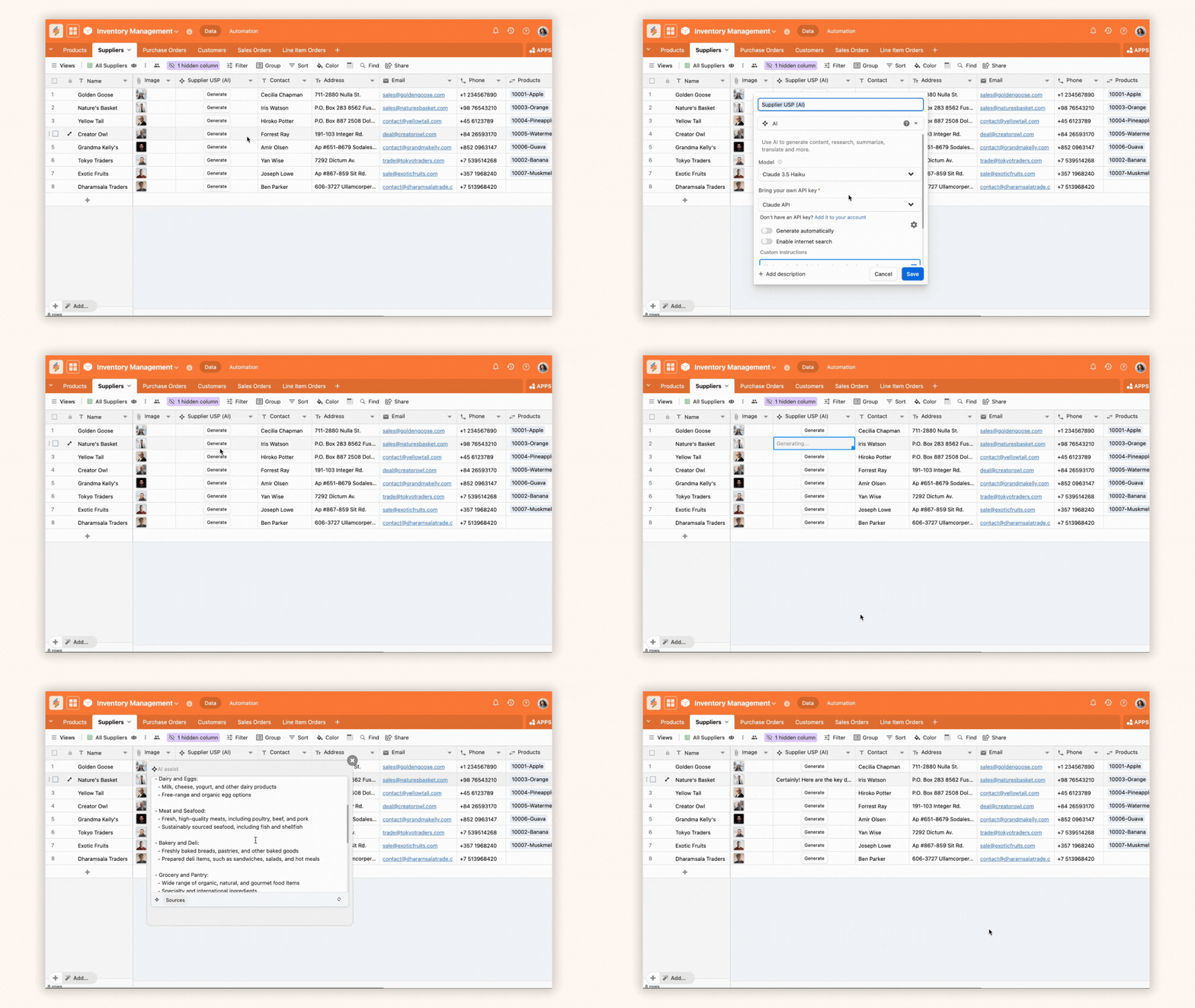
Then came something we’re especially proud of: AI Field Agents.
Think of them as tiny specialists working inside each column. The best part, you choose your own models from OpenAI, Gemini or Anthropic and bring your own API key to monitor usage and scale it as per your workflow.
Upload data → An AI Agent extracts, classifies, cleans, rewrites, summarizes, matches, analyzes it. This one upgrade triggered a wave of real-world use cases:
- Enriching people and company data
- Auto-scoring leads
- Summarizing customer tickets
- Generating campaign briefs, captions and more
- Cleaning product catalogs
- Extracting clauses from contracts
- Matching resumes to job roles
- Organizing research notes
- Generating insights on the fly
These weren’t “AI projects”; they were, in fact, everyday workflows that were simply made intelligent. You could also choose to enable web research, generate AI output automatically as you type in the cell or even fine-tune randomness. Teams told us it saved hours, reduced rework and freed them from the fatigue of repeating tasks that didn’t need manual brainpower anymore.
AI Document Analysis : Turning Files into Structured, Searchable Data
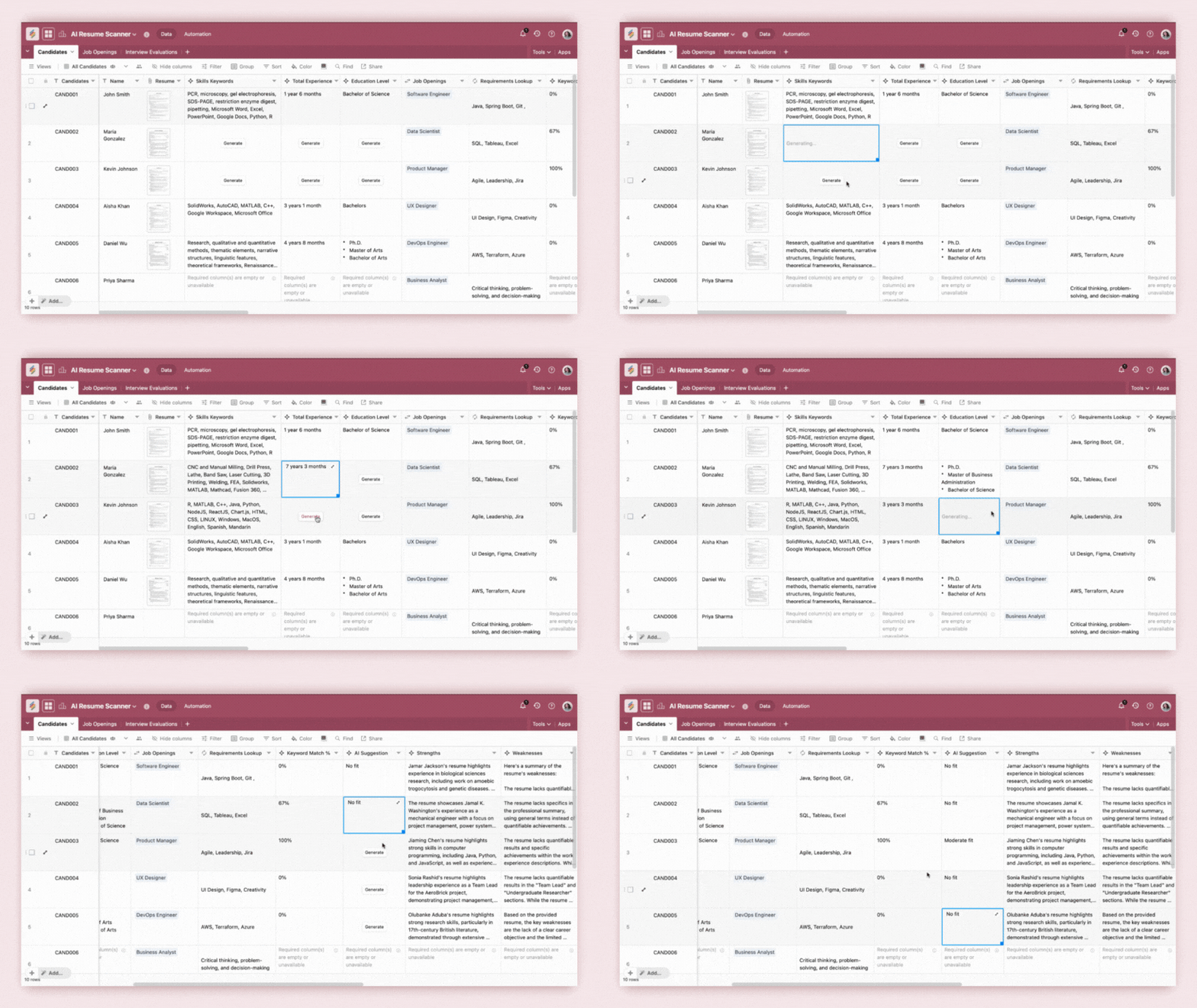
Documents sit everywhere: on laptops, in emails, in drives. It's basically dead data unless someone reads them.
So we launched AI Document Analysis, giving teams the power to convert PDFs, contracts, invoices, resumes, brand docs, and scanned images into structured, query able data inside Stackby.
The drill was simple: Upload file → AI fields extracts what matters.
- Finance teams created automated invoice pipelines.
- HR teams parsed resumes at scale.
- Agencies checked brand compliance in seconds.
- Procurement teams analyzed vendor contracts without outsourcing.
- Entrepreneurs scanned business cards and automated messages in minutes
For the first time, documents became part of the workflow and not a separate bottleneck.
AI-Powered Templates: Ready-to-Use Workflows for Real Teams
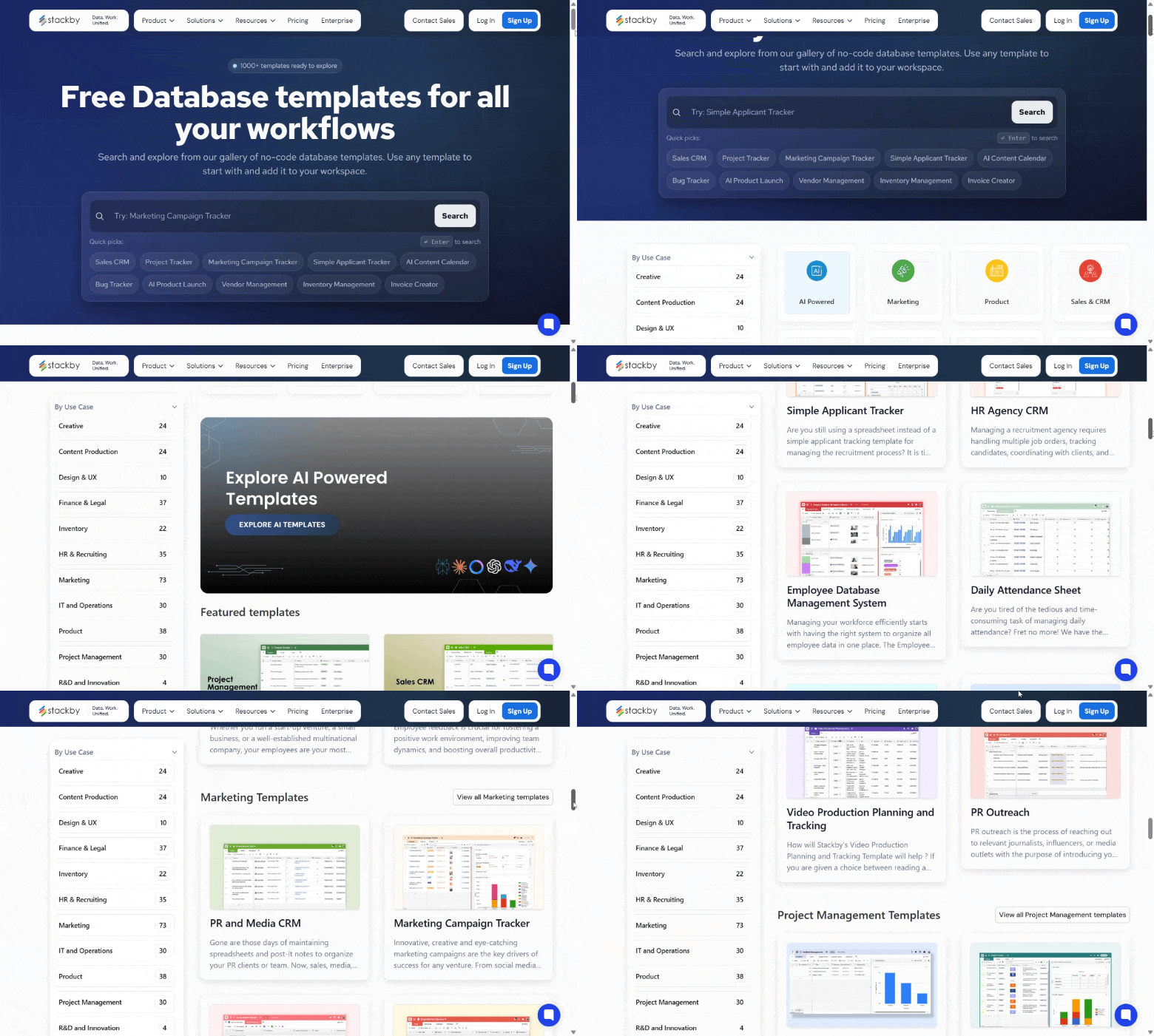
We also released an entire library of AI-powered templates, prebuilt workflows for customers across industries. These weren’t generic templates. Each came with:
- Prebuilt schemas
- AI fields
- Document agents
- Automation suggestions
- Form layouts
- Dashboards
Explore all AI templates here
Stackby Guides : Because AI Is Powerful Only When It’s Usable
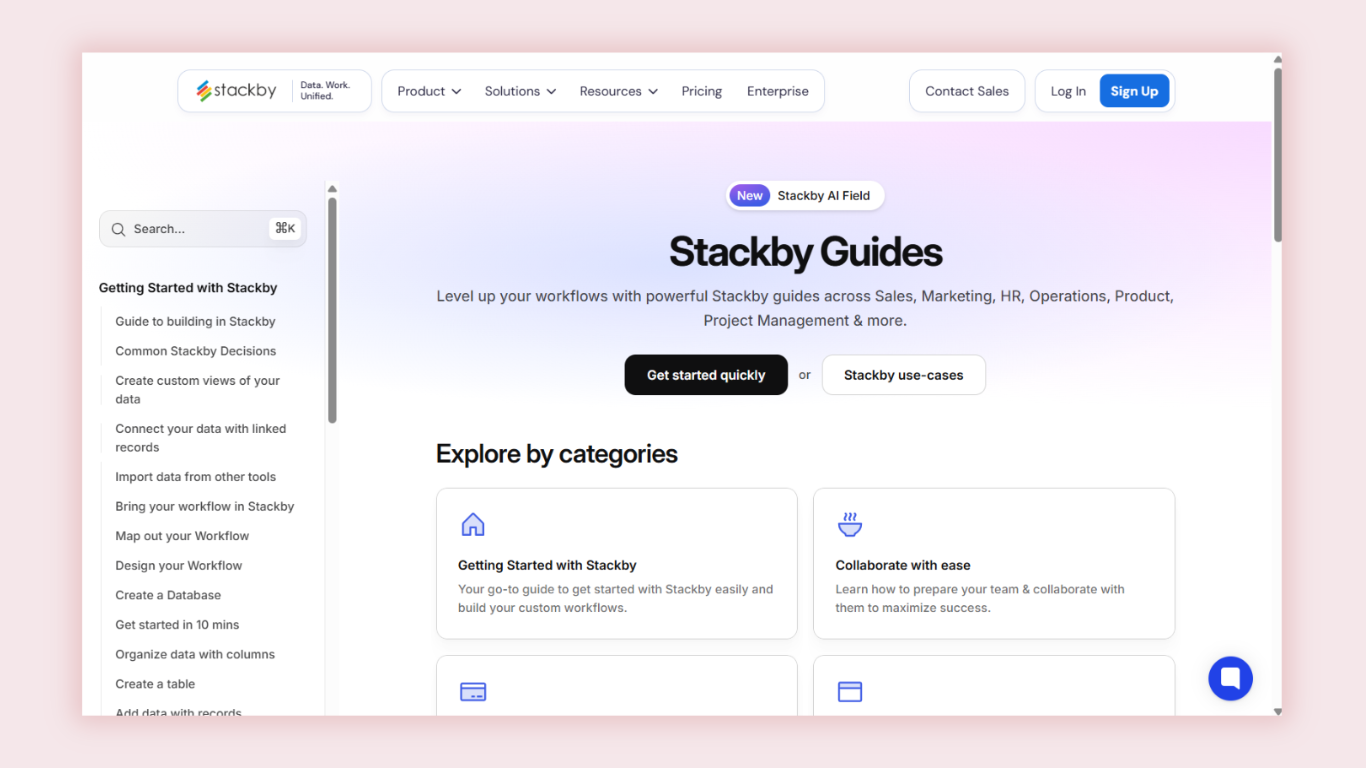
With every new feature, one question grew louder: How do we help people truly understand what’s possible?
So we built Stackby Guides, a hub of workflows, tutorials, recipes, and practical examples. Not documentation. Not theory. But real, contextual, “here’s how you solve this” content.
From AI workflows to CRM setups to automation recipes, Guides became the place teams go when they want answers, not instructions.
Explore Stackby Guides
We also launched an AI newsletter on LinkedIn called AI at Work. Subscribe here!
Customer Stories : Because Our Progress Means Nothing Without Theirs
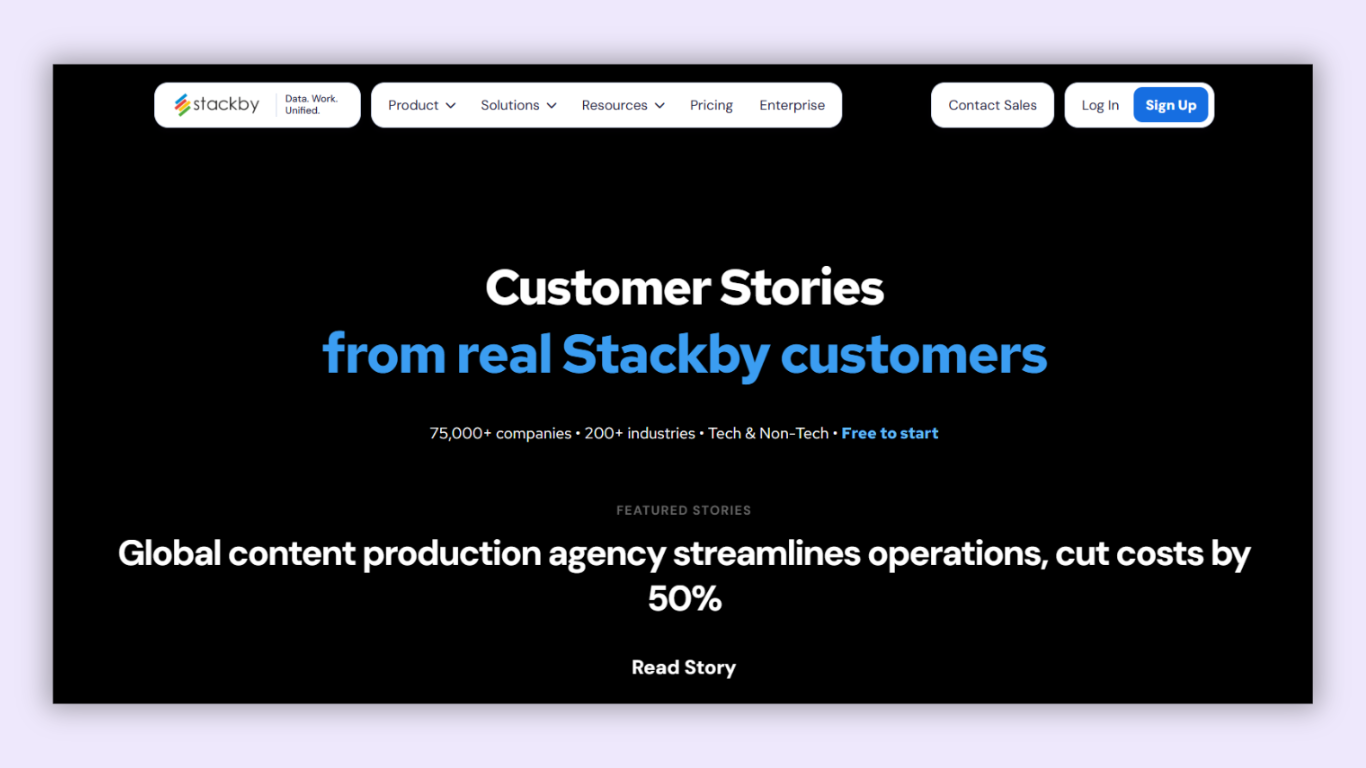
One of our proudest 2025 milestones was launching Stackby Customer Stories.
Every story captured how teams from SMEs to agencies to enterprises used Stackby to:
- Run operations
- Build CRMs
- Automate reporting
- Handle inventory
- Manage campaigns and content production
- Scale collaboration
When we read them, we didn’t just see results, we saw resilience and creativity. And it was a wholesome reminder that people use Stackby to build careers, not just databases.
Bringing CRM Playbooks to Life
We introduced a dedicated CRM package to give sales teams a structured, AI-assisted way to manage pipelines, deals, activities, and follow-ups. The highlights were:
- Two-way Gmail & Outlook sync
- Email actions inside automations - with Outlook and Gmail
- AI-powered lead scoring using AI fields
- Contact & Company enrichment using AI fields
- Activity tracking on each record - Notes, Call Logs, Meeting summaries and more.
It became one of the most adopted upgrades of 2025, especially for teams that wanted something easy, flexible, and intelligent without the weight of traditional CRMs.
A Fully Rebuilt Collaboration System : Activity Bar, Email Sync, & Better Controls
Collaboration got a major overhaul:
Activity Bar on Every Record
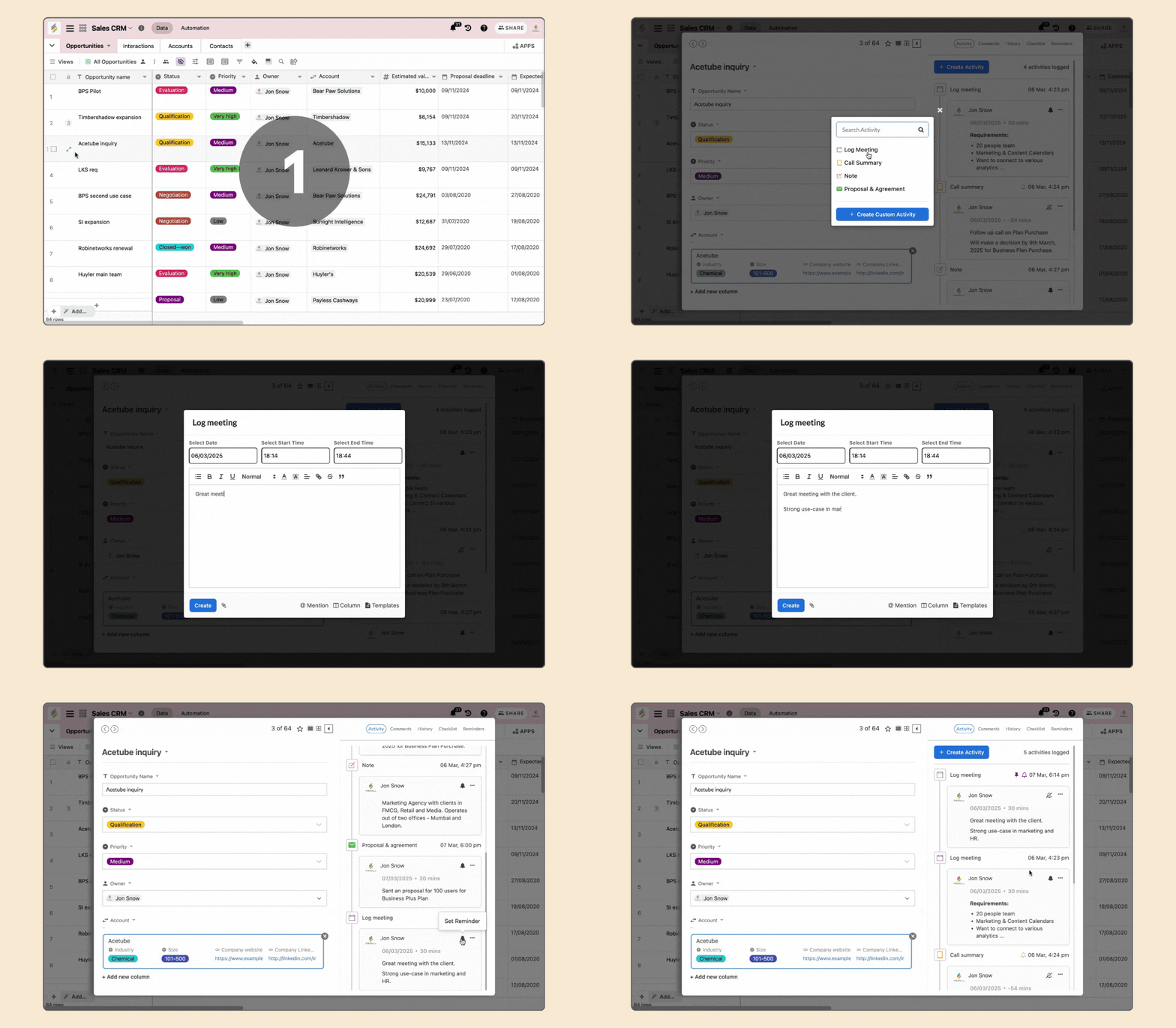
A clean timeline of notes, call logs, meeting summaries, comments, revisions, and reminders.. Everything connected to one record and finally in one place.
Two-Way Email Sync
Send, receive, and log emails directly from Stackby without juggling tabs or scattered communication. Integrate with Outlook and Gmail and send and receive emails on each record.
New Views & Column Permissions
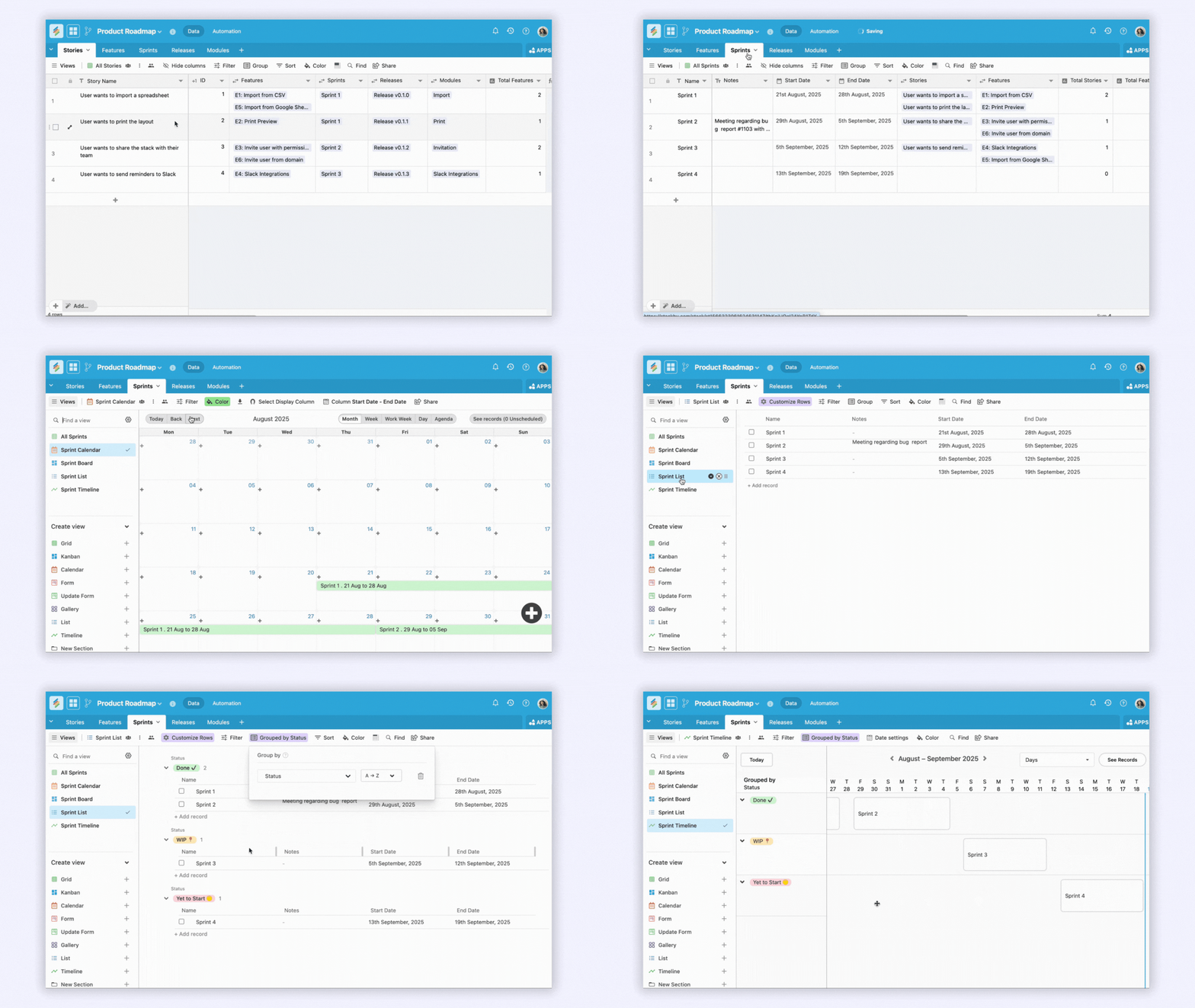
More control. More clarity. Perfect for larger teams who needed data separation without complexity.
These changes were subtle on the surface but transformative for everyday work.
Automations Grew Up : Smarter Triggers, More Powerful Actions
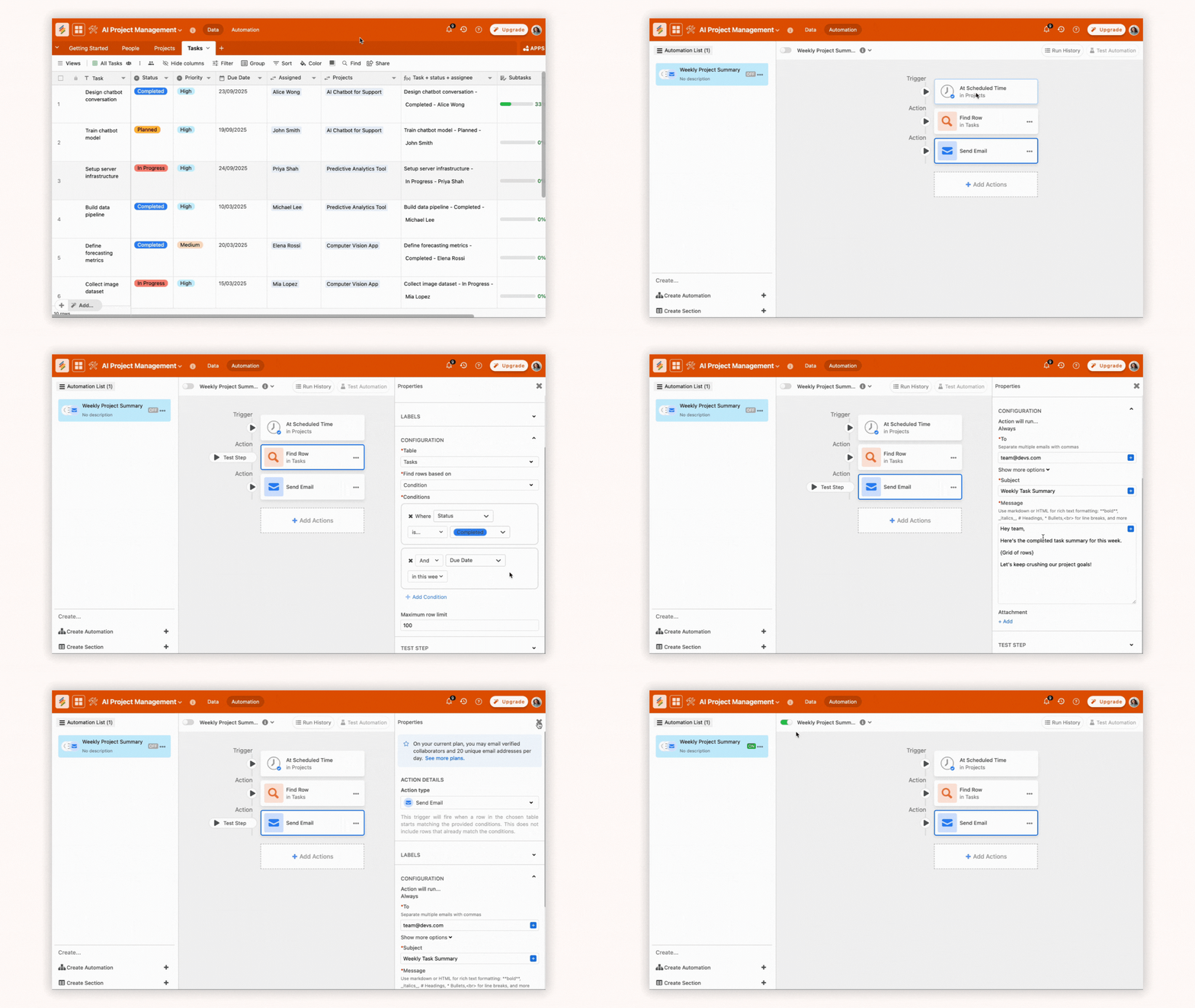
2025 was the year our internal automations matured.
New Triggers
- Webhooks (the most requested trigger of the year)
- Advanced conditional logic
- Multi-step flexibility
New Actions
- “Generate with AI”
- Gmail + Outlook actions
- Slack & Microsoft Teams (Coming soon)
- JIRA
- Structured email formats (List & Grid)
- AI-powered summaries & suggestions
Teams built approval systems, reminders, pipeline updates, escalations, follow-ups, and more, all running in the background. Automation went from being just a feature to becoming an engine inside Stackby.
Power-ups, Forms & Performance : Making the Everyday Experience Faster
New Power-ups
Our power-up ecosystem expanded, especially around forms and reporting.
Forms 2.0 - One of Our Biggest UI Upgrades
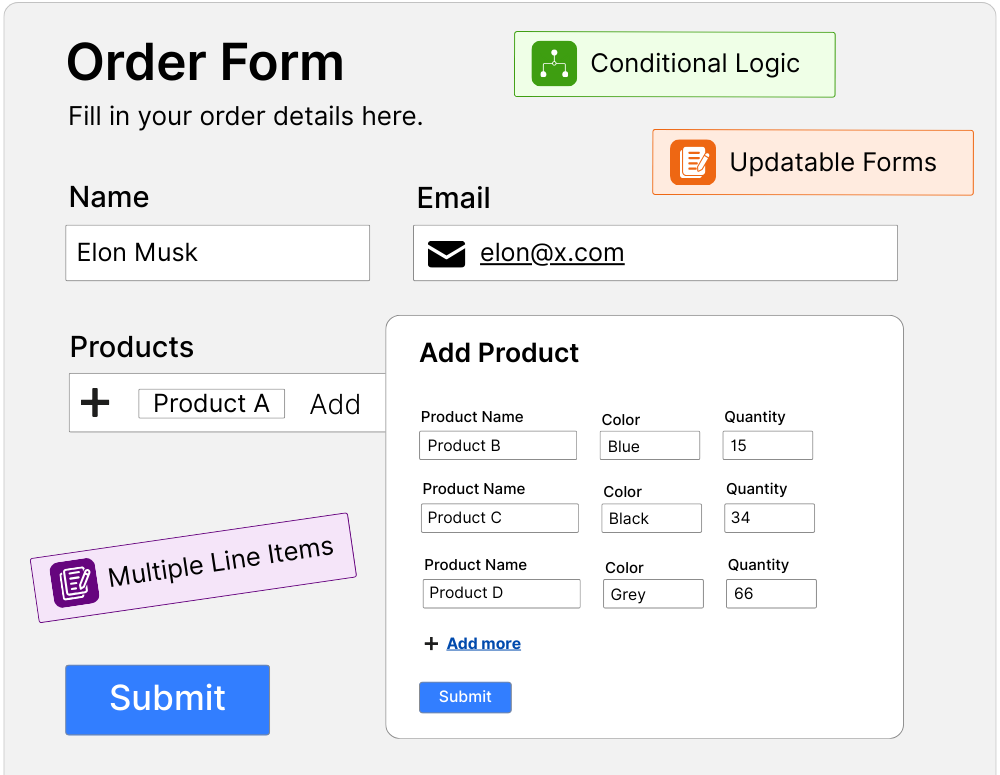
Forms went from basic data collection to structured workflow intake.
- Sub-forms within forms (multi response forms) for order management workflows
- New display elements - Image, Video, Dividers
- Better design
- More field types
- AI suggestions
- Faster loading
- AI built forms
Massive Grid Performance Improvements
Speed became a priority. The grid is now smoother, faster, and built to scale for larger datasets that teams will bring in 2026. We’ve optimized the platform for 500,000 records per database.
A Cleaner, Faster, More Thoughtful Product

2025 also became the year we polished everything as we wanted Stackby to feel not just powerful but welcoming.
New Onboarding & Redesign
A cleaner UI, simpler navigation, smoother interactions to get to value faster.
New Formula Editor
Better error handling, smart suggestions, color formatting and cleaner look and feel.
New Database Tools
Enhancements for power users and analysts who needed more granular control as their data grew.
Improved Home Page
Better first impressions, clearer choices, guided starts (especially with AI).
Growing with Our Enterprise Users

The year also brought our strongest enterprise momentum yet. We introduced:
- Audit Trails
- Advanced Admin Settings for Organization Admins
- AI Settings & Governance
- Domain Verification
- Better API controls
- Improved authentication & permissions
- Performance scaling enhancements
- Okta SSO
- Okta SCIM (coming soon)
Large teams needed reliability, predictability, and security and we delivered with a more mature foundation.
Updated Developer API : Because Great Platforms Need Strong Extensibility
Developers got more endpoints, better documentation, and greater flexibility to build on top of Stackby. Our workflows became more connected from custom triggers to external data systems to embedded use cases. We now have endpoints for stacks, tables, views, columns, records along with filtering and sorting.
Coming in 2026 : The Most Ambitious Roadmap We’ve Ever Had

We’re ending 2025 proud, and we’re starting 2026 hungry. Here’s a glimpse of what’s coming:
Conversational AI Builder
Build workflows, databases, automations, fields, forms, and dashboards by simply talking to the system.
AI powered App Builder/Interfaces
Custom interfaces without code. Apps built on top of your data and personalized for every role.
Custom API & Scripting
A deeper layer of extensibility for the technical team to bring data from anywhere and transform workflows with low code.
These aren’t just other features, but they’re steps toward a future where teams design their own software with AI and structured data working together like never before.
A Year Defined by You (And Why We’re Grateful)
Every release in 2025 came from one place: your feedback, your frustrations, your ideas, your requests.
You told us what wasn’t working. You told us what should exist. And you trusted us to build something better, something that could keep up with the way your teams scale. And here's the thing about us, we don’t take that lightly.
We’re here because of:
- every founder building their first system,
- every analyst cleaning data at midnight,
- every marketer tracking campaigns,
- every HR team managing pipelines,
- every ops manager automating workflows,
- every enterprise team relying on Stackby for stability.
We’re here because of You. You built this year with us.
Closing Thoughts : The Year of AI, The Start of a New Stackby
2025 was big. Bold. Demanding. Rewarding. Transformational.
But it was only the beginning.
Now we are stepping into 2026 with more clarity, more conviction, and more responsibility than ever.
- To listen.
- To build.
- To simplify complexity.
- To turn AI into something practical, not intimidating.
- To make databases feel human.
- To be the platform teams trust as they scale.
So thank you for being with us. Thank you for your patience, your excitement, your honesty, and your belief.
Here’s to another year of building together. 🙂
From all of us at Stackby, Happy New Year! And welcome to what comes next.

![Google Sheets Vs Excel: Which is better for you? [2026]](/blog/content/images/size/w960/2023/05/Google-sheets-vs-Excel.png)