Introducing Stackby Forms
Meet the newest layout on Stackby. Now, you can create custom forms as well as collect responses on a single platform - all from your table.
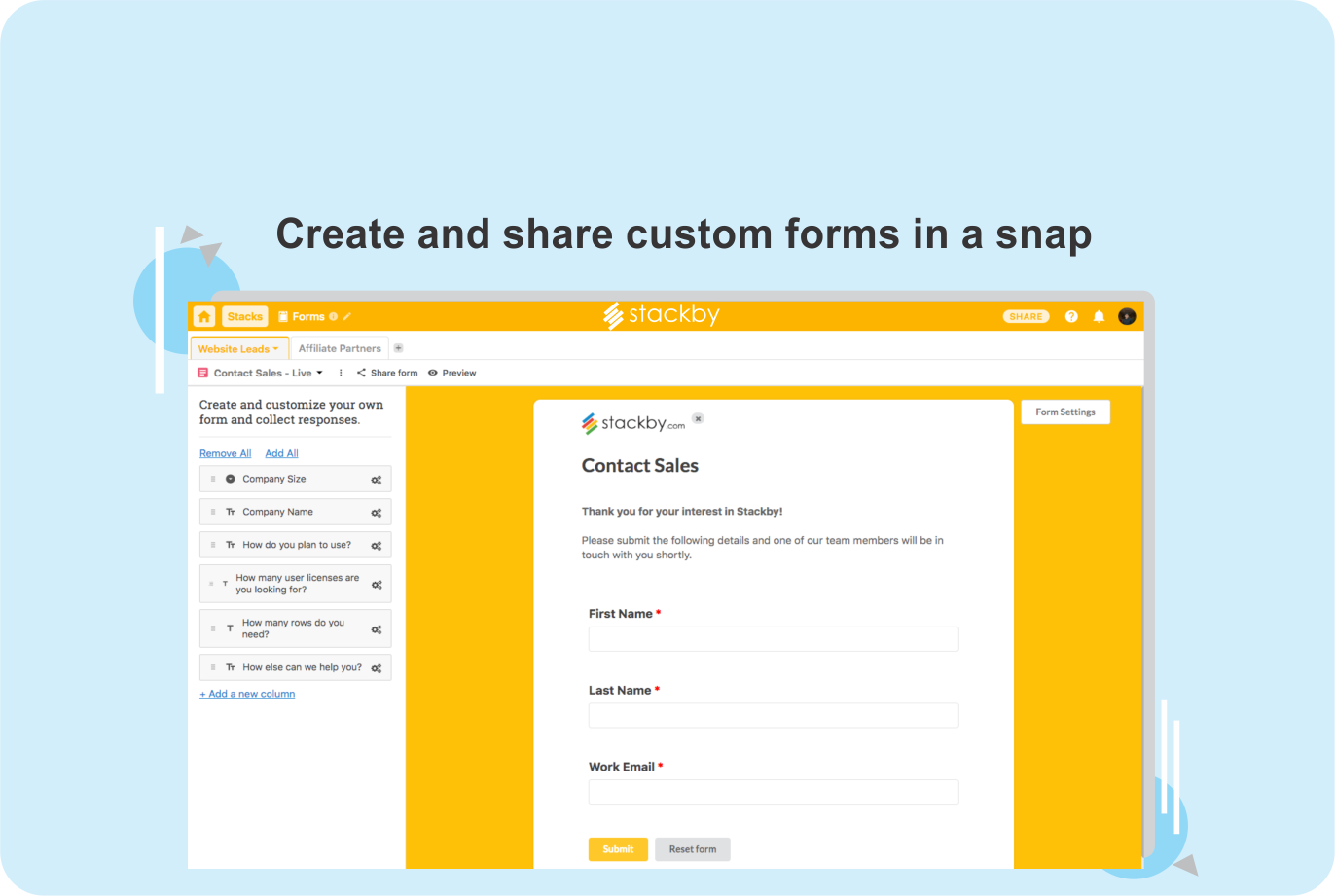
Meet the newest Layout on the Stackby layout-block -- the Form. With this form layout, you can easily forget how you have been using multiple platforms -- one to create forms and the other to check the responses.
Hey, we just introduced the Form Layout on Stackby. That is the fourth layout to join our different views after Grid, Kanban and Calendar. Yeah, we are celebrating, simply because now it would be very easy for you to create custom forms on Stackby.
Yes, we wanted to give you building blocks, for you to create your way. And forms are part of the big picture. No more ping-ponging between multiple applications to configure forms, collect responses in spreadsheet and then analyze - now you can manage it in a single place where your data is.
When you create forms on Stackby, you can:
Create custom forms from your table
It all starts with the grid. Easily create your forms from your table -- each column heading acts as a question -- so all you need to do is change the heading and the column property as per the answers you want (single/multiple options, long/short text, check-boxes, etc.). Once you are done, just go to the layout switcher and select the form layout. That's it --done. Either you click on the 'Add all' or individually drag and drop each column you want to configure as questions.
Stackby’s online form builder makes it easy to turn table fields into custom questions and collect responses directly in your workspace.

Change your form settings
On the form layout, edit and update form options -- add your company logo, form name/description, change the form type give it a background color, edit a submit message or even redirecting to a URL once a form is submitted. You can personalize it your way.
Forms are one way to work with your data in Stackby, alongside other database views that help teams organize and manage information.
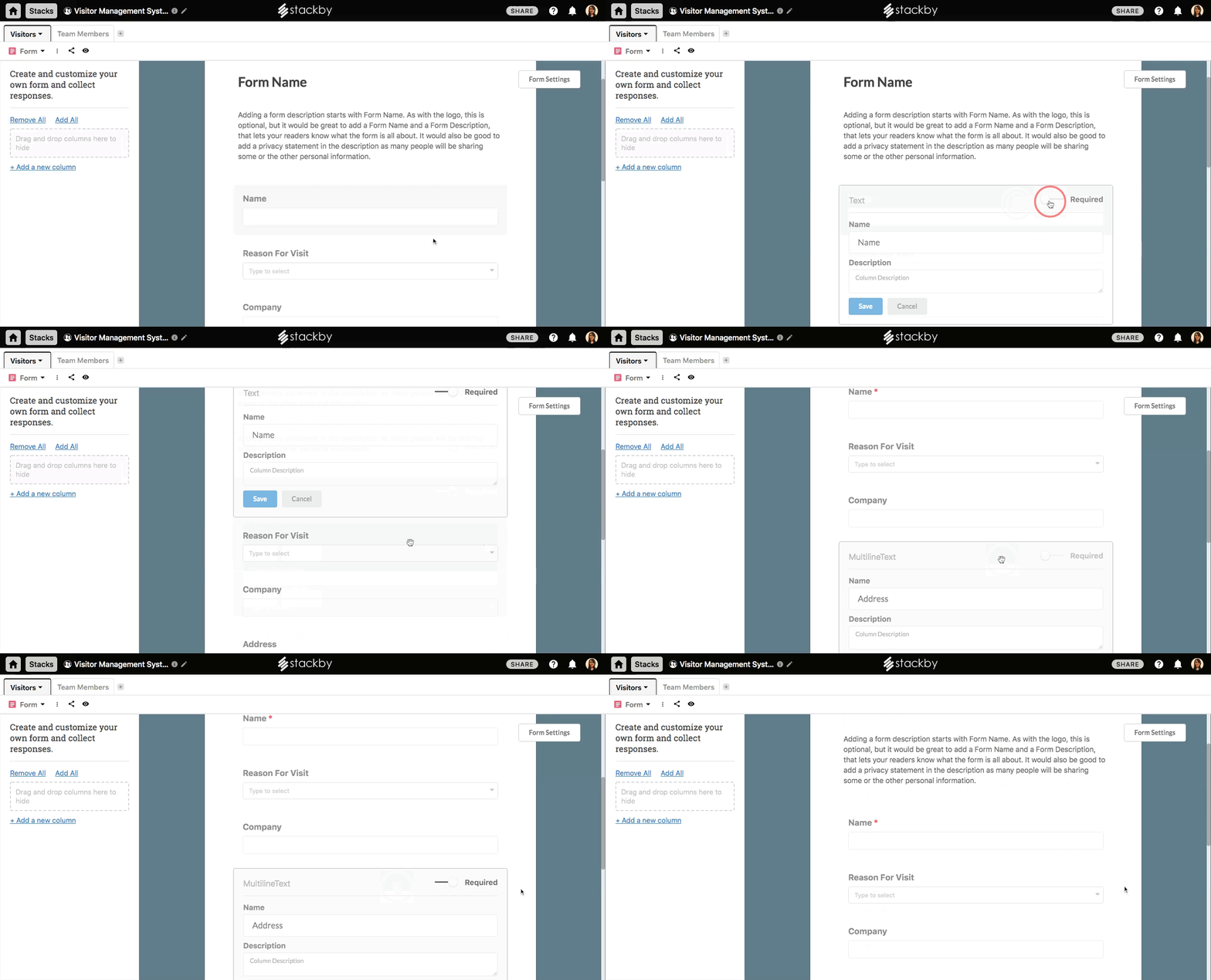
Choose your settings, however you like -

Share or embed the forms with your target audience
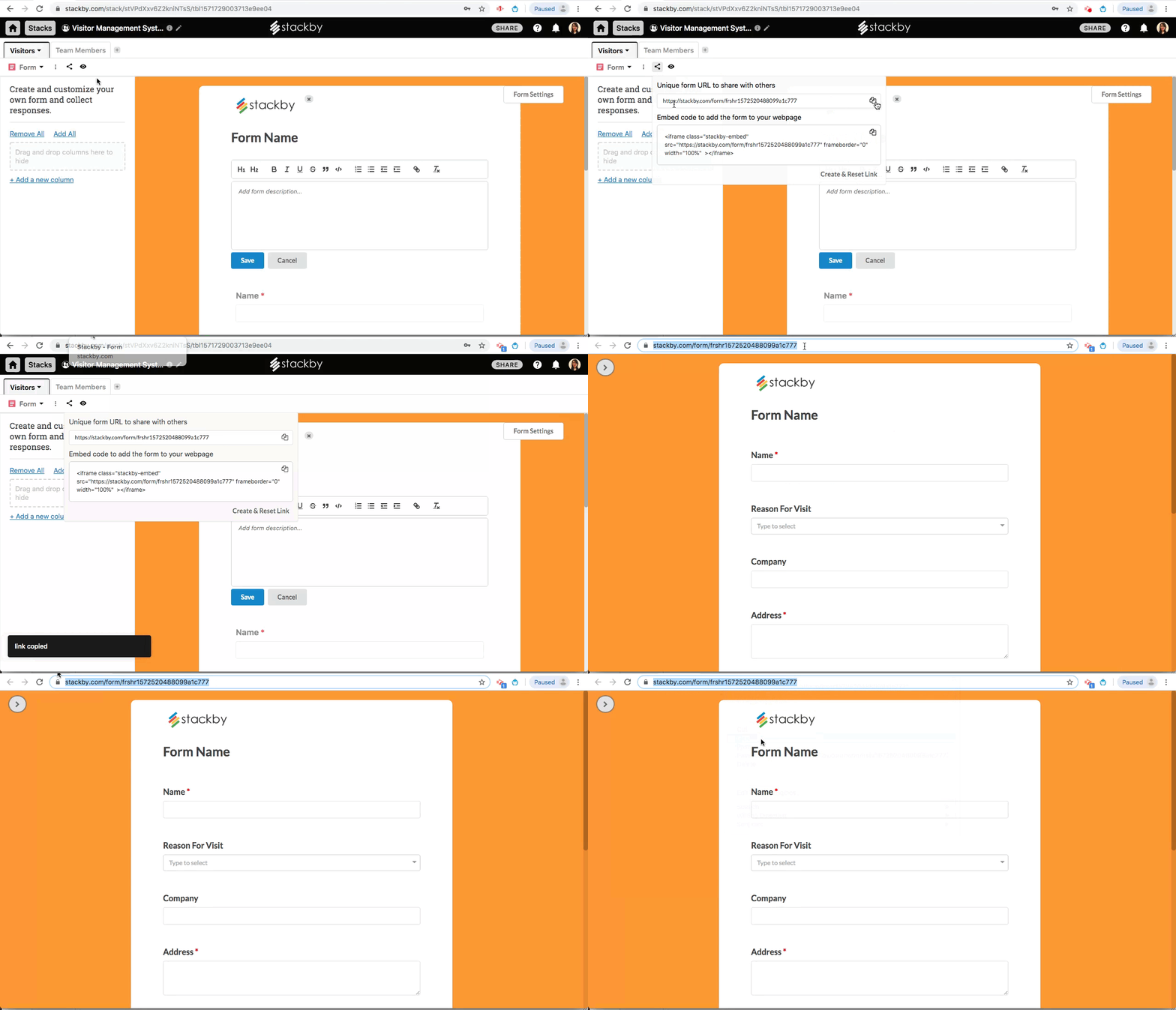
Sharing your form is easy -- just select the link to share the form or select and paste the embed link -- no more worries about coding.
Collect responses directly in Stackby
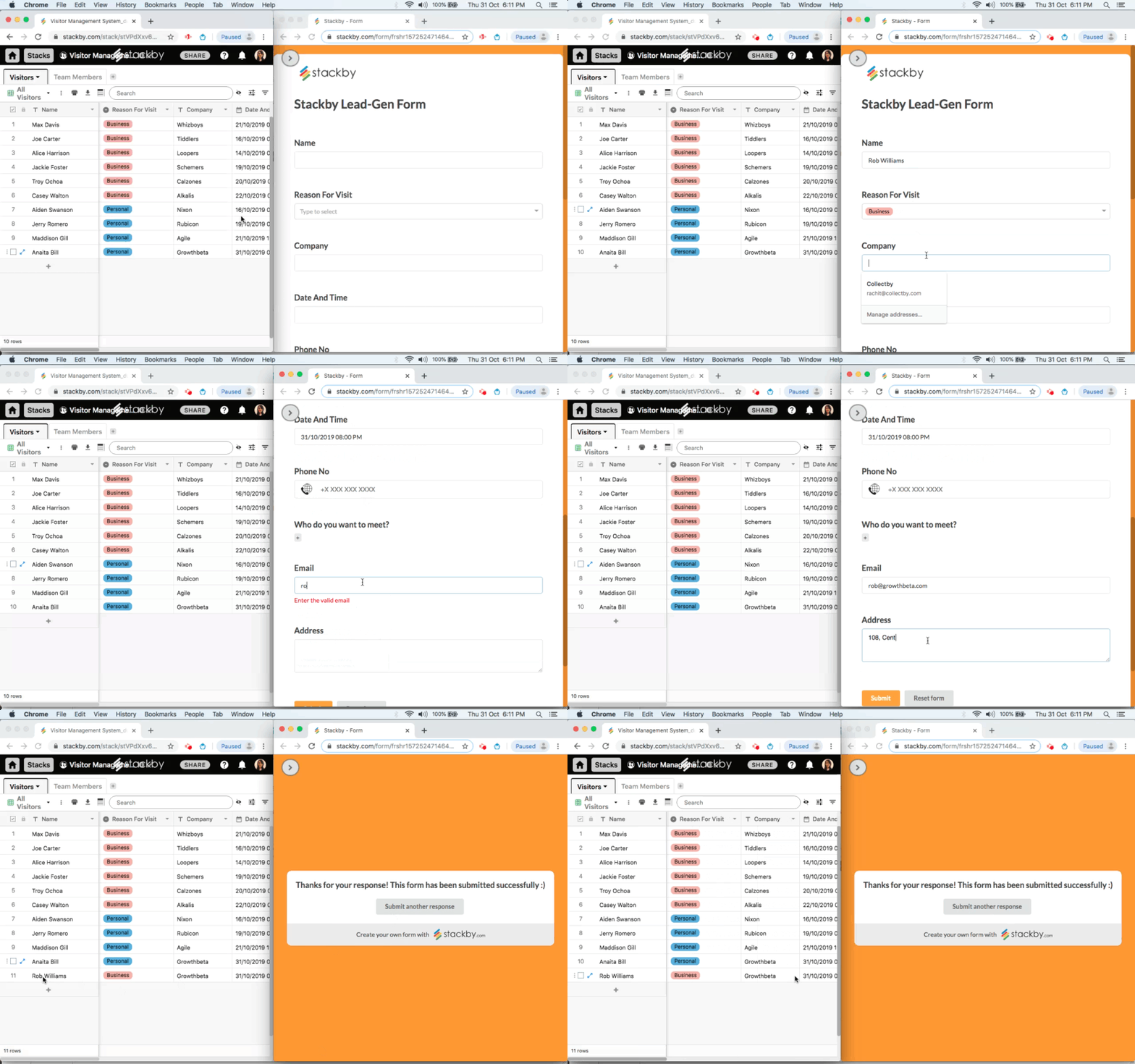
As respondents answer, the responses are collected as a new record on the same table where you put in the questions by changing the headline. All in a single place. Once responses are collected, Stackby automations can help teams reduce repetitive work and connect data collection with their wider workflows.
Easily collaborate with your team to get things done
We are also a team collaboration platform and you can collaborate easily with your team on the Form layout as well by making a simple change to the settings. It is possible for your team to edit and update the responses should there be any need for your data analysis team.
Teams that use multiple tools can also connect their workflows through Stackby’s integrations, helping keep their work connected.
All these with minimum fuss. The simplicity of creating a form on Stackby is what you will love about this layout. The fact that you don’t have to worry about the background coding or train your team on the process is the best part.
Still wondering the use-cases?
Wondering what all types of forms can you create on Stackby? Don't worry - we have some templates for you get started in couple of clicks -
...and 100s more you can imagine.
Start creating your forms today for any of your use-case and take your workflows to the next level. Sign up on Stackby for a 7-day free trial.
FAQs: Stackby Form Layout
What is the Form Layout in Stackby?
Stackby Form Layout lets users create custom forms directly from their tables. Each column can become a form question, and submitted responses are automatically stored as new records in the same table.
How do you create a form in Stackby?
To create a form, open a Stackby table, configure column headings and field types, and switch to Form Layout. Add all columns or select individual fields to build a form that matches your data collection needs.
Can you customize forms in Stackby?
Yes, Stackby forms support customization options such as company logos, form names, descriptions, background colors, submission messages, and redirects to a URL after submission.
Can Stackby forms be shared or embedded on a website?
Yes, Stackby forms can be shared using a unique link or embedded on a website using an embed link, allowing respondents to submit information without requiring custom cod
Where are Stackby form responses stored?
Form responses are stored as new records in the same Stackby table used to create the form. This keeps collected information organized and accessible for analysis and team collaboration.
Can teams collaborate on form responses in Stackby?
Yes, teams can collaborate on form data and update responses when needed. This helps teams manage collected information and work together on data analysis.
Conclusion
Stackby’s Form Layout makes it easier to create custom forms, collect responses, and manage data in one workspace. By turning table columns into questions, customizing form settings, and sharing forms through links or website embeds, teams can simplify data collection without relying on multiple applications.

Whether you need a user feedback form, job application form, visitor management form, or maintenance request form, Stackby brings form creation and response management together. Combined with its database views, automations, and integrations, the Form Layout helps teams keep their information organized and their workflows connected.