Automate Data Entry: Save Time and Boost Productivity with Stackby
Learn how to automate data entry with Stackby using API connectors, forms, integrations, and internal automations. Explore practical use cases for lead generation, campaign tracking, CRM, and inventory management to reduce manual work and improve data accuracy.
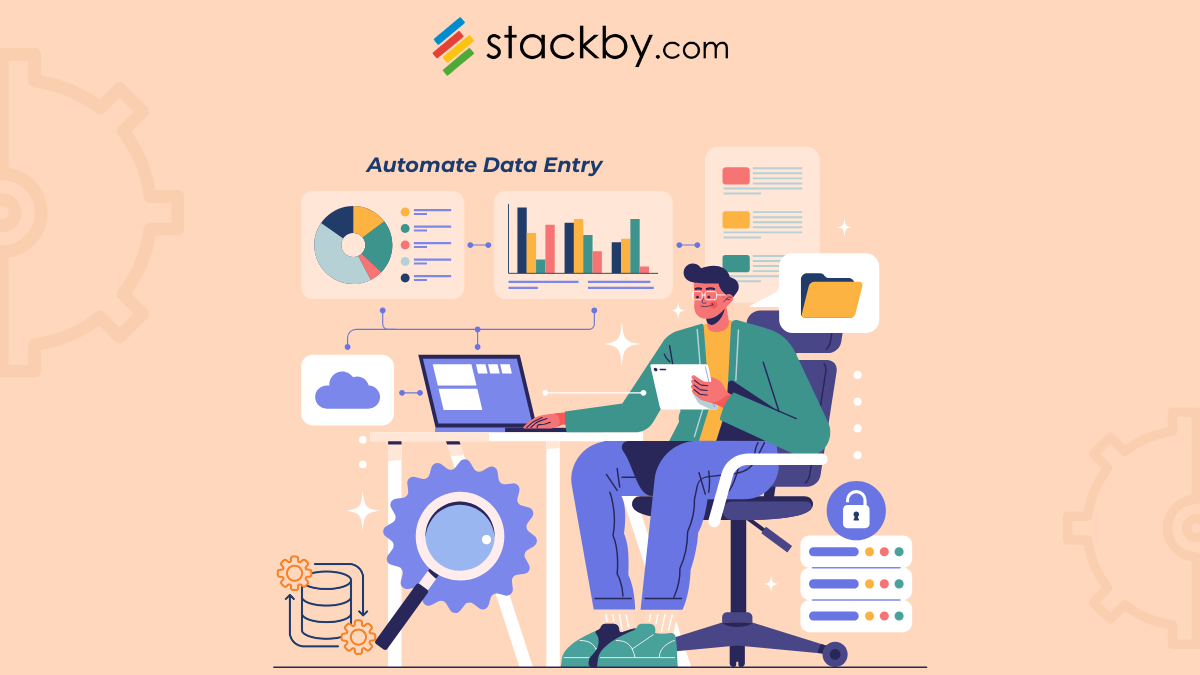
If you have ever spent hours copying and pasting data from one tool to another, you know how manually doing data entry can be frustrating: it consists of irritating repetitions, is error-prone, and is frankly one of the most significant time-consuming activities in modern workplaces.

But what if you could completely get rid of it?
Welcome to the new world of data entry automation. More importantly, welcome to Stackby: a no-code platform dedicated to automated magic at your behest.
Let us break things down for you and show you precisely how Stackby would save you time, lower your error and increase your productivity efforts, starting from now.
The Hidden Cost of Manual Data Entry

Before we move forward into the solution, let's take a moment to address the elephant in the room: manual input kills efficiency in your team.
Here is why:
- Typos & Errors: Humans make mistakes, misplaced decimals or a name spelled incorrectly, such small typos may cause big trouble.
- Repetitive Work: Updating the same fields over and over again? That's time you'll never get back.
- Inconsistent Data: Everybody enters data differently. Some people use abbreviations, and some people write it in full. That inconsistency spoils the data quality.
- Scalability Issues: As your business grows, so does the data. If automation is not there, the team is drowned under countless spreadsheets and forms.
The bottom line, these manual processes tend to slow you down. They leave your team tired, your data messy, and your decision-making delayed. When spreadsheets become difficult to maintain, understanding the differences between a spreadsheet and a no-code database can help teams organize growing datasets more effectively.
What is Data Entry Automation?
Data entry automation is the process of capturing, organizing, and updating data without human interaction. It’s about replacing boring copy-and-paste routines with intelligent and efficient workflows to overcome the biggest of mind-numbingly repetitive tasks.
A clear understanding of what a database is also helps businesses structure information for more reliable automated workflows.
In a business setting, that means:
- Getting lead info directly into forms or APIs
- Syncing up sales data coming from CRM into analytics platforms
- Auto-Updating Dashboards with Campaign Stats in Real Time
- The elimination of duplicate data entry across tools
Result: fast processes, fewer errors, and cleaner, more true data.
That's the promise Stackby calls out for all.
So, Stackby is your shiny friend when it comes to automating data entry.
Think of Stackby as part spreadsheet, part really powerful database with automation infusing everything. No line of code is required to construct and automate workflows.
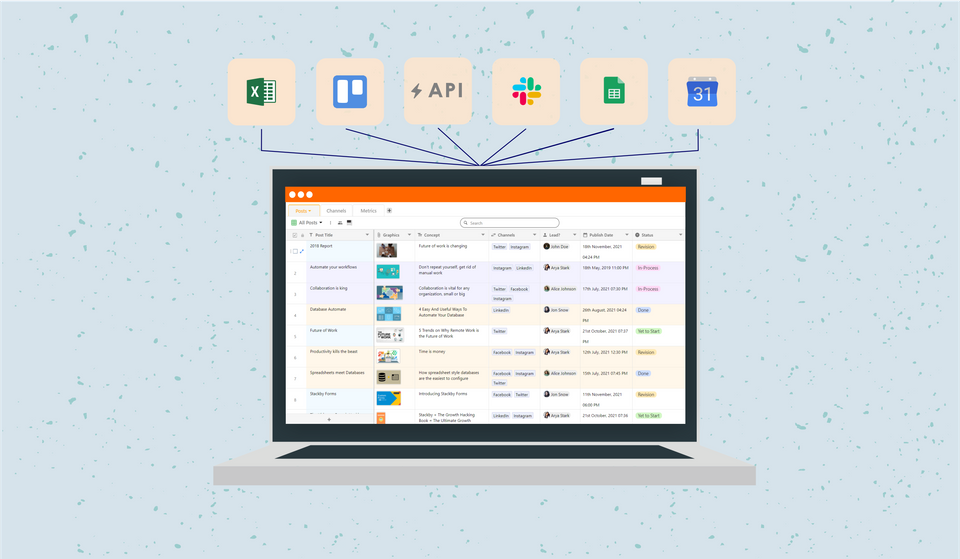
With API connectors, custom forms, and integrations with tools like Zapier and Make (formerly Integromat), Stackby makes automation feel almost... effortless.
Stackby really simplifies the process of managing data. It's a tool that lets you customize and automate your data entry tasks without needing any coding skills. Whether you're keeping track of leads, monitoring campaigns, or connecting different apps, Stackby helps you create smooth and efficient workflows. It's all about making your work easier and more organized, which is something we all can appreciate.
So, let's see how it works.
How Stackby Automates Data Entry
Stackby gives you many ways to automate data entry, and each is customized for different workflows. Here are all the important things that make it possible:
🔗 API Connectors
Automatically pull in data from tools like:
- YouTube (video performance)
- Google Analytics (site traffic)
- Facebook Ads (campaign results)
and more such 3rd party tools via Zapier, Pabbly, Make etc.
Just link your API key and select fields to populate; after that, data will flow directly into your columns.

Integrations with Zapier, Make & Webhooks
Want to take it a mile further?
Stackby works with over 5000 apps via 3rd Party apps like Zapier and Make. In other words:
- Automatically update rows when the meeting is booked
- Added notifications via Slack for form submissions
- Sync new contacts from Gmail.
Extreme power, flexibility, yet the simplest to set up.

Forms in Stackby

Would you like to collect leads, feedback, or requests?
Create forms linking to your table. The moment the form is submitted, a new row gets added with their data, no manual typing as such is required.
The Stackby online form builder helps teams collect structured information and send form submissions directly into their workflows.
Perfect for CRMs, contact forms, job applications, etc.
Internal Automations
Stackby’s internal automations allow you to set custom workflows that respond to changes in your data. Define triggers and actions, such as:
- When a row is created, assign it to a team member and set a due date.
- When the 'Status' changes to 'Completed,' set the 'Completion Date.'
- When 'Priority' is 'High,' send a notification to the manager.
Configure these automations directly within Stackby’s automation tab, making your workflows adaptive and efficient.

Use Cases of Automation in the Real World
Still confused as to what would be the real-life use of this? Here are some of the business operations done by Stackby for automated data entry:
HR teams can organize employee information and onboarding records with an employee onboarding form template.
HR teams can organize employee attendance information with an employee attendance tracker template.
Lead Generation
Use Typeform or Facebook Lead Ads to collect leads that automatically get sent into your Stackby CRM with tags and timestamps. Teams can collect and organize prospect information using a B2B lead generation template to streamline their lead capture process.
Campaign Tracking
Connecting Stackby to Facebook Ads or Google Analytics and directly bringing in the data around CTRs, conversions, or ad spend onto a live dashboard. A marketing campaign tracker template helps teams organize campaign records and monitor performance data in one place.
CRM Automation
Building a simple form to capture customer info: incoming contacts create and update records in Stackby CRM without lifting a finger.
A sales CRM template can help organize customer records, lead details, and follow-up activities.
Teams that are exploring how to use Google Analytics in Salesforce often automate the flow of customer and campaign data to gain better visibility into conversions and sales performance.
Inventory Sync
Using eCommerce APIs, connect for real-time inventory tracking, so the team always knows the latest numbers. For product-level stock records, a product inventory template helps teams maintain organized product and inventory information.
Setting Up Data Entry Automation in Stackby: Step-by-Step
Anything typical setup might look like this:
Step - 1. Choose Your Workflow: Define what data you need and where it comes from (form, API, or another app).
Step - 2. Create a Base: Create a table in Stackby that represents your process.

Step - 3. Add Columns Ready for Automation: Dropdowns, dates, API, or text will do.

Step - 4. Now, Connect Your Data Source: Set up an API key, create a form, or link the tool via any 3rd app like Zapier, SharedCount etc..

Step - 5. Schedule or Trigger Updates: Specify how often automation triggers - real-time, hourly, or daily.

That's it! The data is now flowing automatically, saving you hours every week. Teams can use a project tracker template to organize task records, owners, deadlines, and progress updates.
Use Ready-Made Templates to Save Even More Time

Are you unsure as to where you should begin? Stackby has prepared templates to kick-start your automation:
- Lead Tracker with Form
- Marketing Campaign Performance Tracker
- Automated CRM Template
- Project Tracker with API Updates
You can customize any of these templates according to your desired workflow—no configurations from scratch are needed.
Tips for Effective Automation
To further enhance your automation setup, do try and keep these good practices in mind:
- Keep Your Structure Simple: Do not overcomplicate your tables. Operations teams can organize service requests and work assignments using a work order template.
- Validate Your API Output: Ensure that the format of your data corresponds to your column.
- Test Before You Scale: Always do small tests in order to know that everything will work.
- Collaborate: Let the team comment, tag, and assign tasks all within Stackby.

With Stackby Automations, teams can configure triggers and actions to handle routine updates and reduce manual data entry.
The Reason Why Stackby is the Intelligent Choice for Automating Data Entry
No doubt, there are several options to consider, but Stackby stands out for the following reasons:
- The hand-coding is not necessary at all: A few clicks away from automating the system.
- Flexible to any team: Whether sales, marketing, ops, or HR, Stackby fits right in.
- Cost-efficient and scalable: No need to break the bank or hire a developer.
- Live Syncing: Real-time data noshing from their preferred apps.
Frequently Asked Questions About Data Entry Automation
1. What is data entry automation?
Data entry automation is the process of collecting, transferring, and updating information automatically instead of entering it manually. It uses forms, integrations, APIs, and workflow rules to reduce repetitive work and data entry errors.
2. How can I automate data entry without coding?
You can use no-code platforms such as Stackby to collect information through forms, connect external applications, map data to table columns, and configure automations without writing code.
3. What are the benefits of automating data entry?
Automating data entry reduces repetitive tasks, improves data consistency, minimizes manual errors, and helps teams spend more time on analysis and decision-making.
4. Can Stackby automate data entry from forms?Q
Yes. Stackby forms can collect information and add submissions to connected tables. Teams can use the resulting records in their workflows and configure additional automations where needed.
5. Can I connect Stackby with other applications to automate data entry?
Yes. Stackby supports API connections and integrations with external applications and automation platforms. Available connections and capabilities depend on the application and integration setup.
6. Which business processes can benefit from data entry automation?
Sales lead capture, CRM updates, marketing campaign reporting, inventory tracking, employee onboarding, and customer feedback collection are common use cases for data entry automation.
7. How do I get started with data entry automation in Stackby?
Start by choosing a repetitive process, creating a Stackby table with the required columns, and connecting a form, API, or external application. Test the workflow with sample records before automating it at scale.
8. Can data entry automation eliminate all errors?Q
No. Automation can reduce manual entry errors, but incorrect source data, API mapping issues, and configuration mistakes can still cause problems. Validation rules and regular checks help maintain data quality.
Conclusion: Stop wasting time on manual inputs

Time is really too good to be wasted on copying and pasting data.
With Stackby, you can automate all repetitive tasks and keep your data continually clean and consistent; the most important option: Free time meant to focus more on producing results.
So what are you waiting for?
Stackby is free for you to try, with time-saving automation-ready templates designed for your team.
Key Takeaways
1. Data entry automation reduces repetitive manual work, saves time, minimizes human errors, and improves overall business productivity.
2. Manual data entry creates challenges such as typing mistakes, inconsistent records, duplicate information, and scalability issues as businesses grow.
3. Stackby simplifies data entry automation through API connectors, custom forms, third-party integrations, and built-in workflow automations without requiring coding skills.
4. API connectors and integrations help teams automatically collect and sync data from tools like YouTube, Google Analytics, Facebook Ads, Zapier, and Make.
5. Automated forms capture leads, feedback, customer details, and requests directly into Stackby tables, eliminating manual data entry.
6. Internal automations trigger actions such as assigning tasks, updating completion dates, and sending notifications when specific conditions are met.
7. Business processes that benefit from automation include lead generation, campaign tracking, CRM management, employee onboarding, and inventory synchronization.
8. Effective automation requires proper setup: organize your data, configure the right columns, validate API outputs, test workflows, and scale gradually.
9. Ready-made Stackby templates help teams get started with automated lead tracking, campaign management, CRM, and project tracking without building everything from scratch.
10. The biggest advantage of automating data entry is giving teams more time to focus on productive work while keeping business information organized, accurate, and up to date.